🌱 A Fiery Start
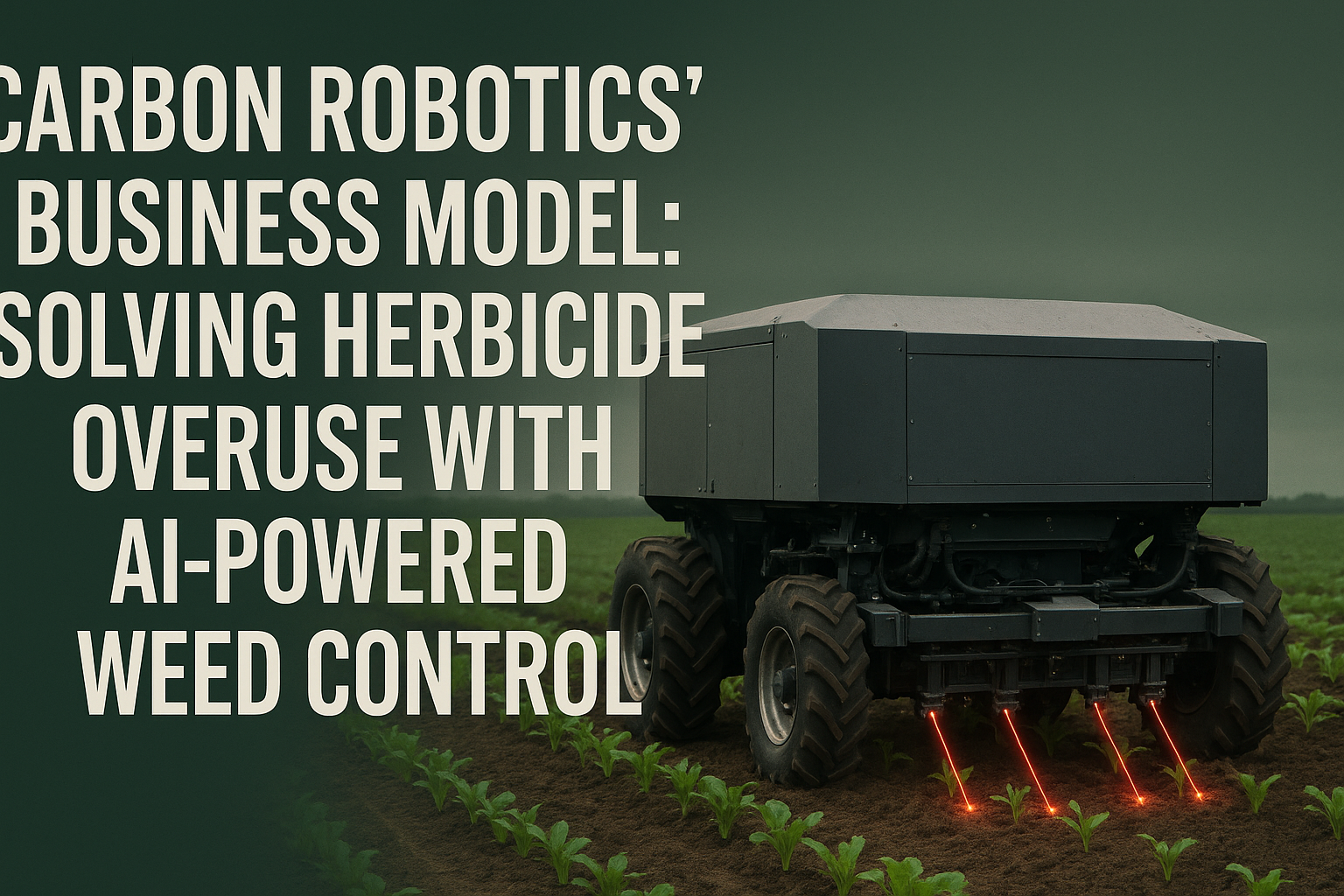
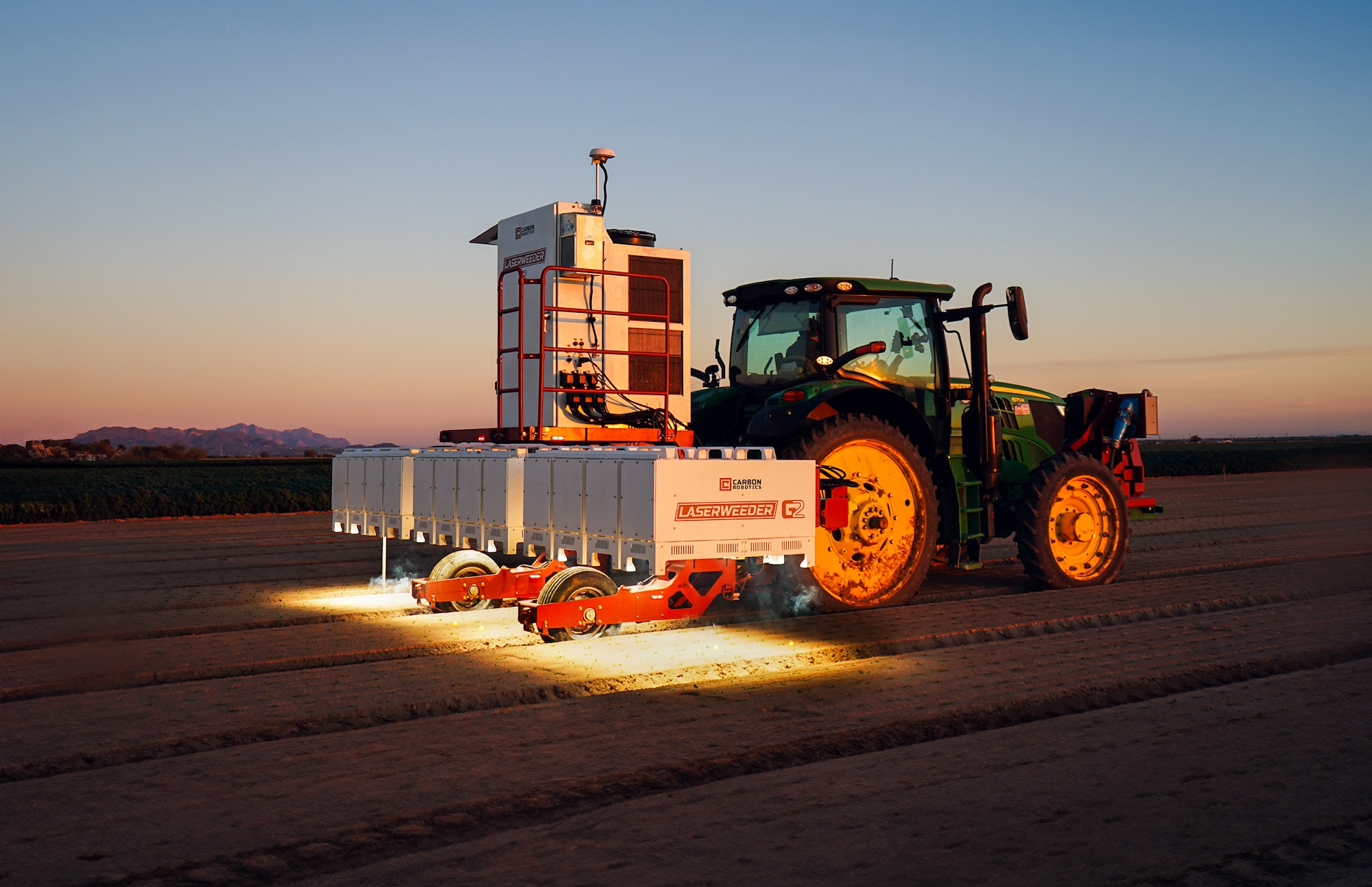
It began in 2018, when former Uber and Facebook engineer Paul Mikesell recognized the untapped potential of AI in farming. Watching “object detection” breakthroughs evolve, he wondered: could that same tech eliminate weeds? By 2021, his vision materialized in the LaserWeeder™, an autonomous robot capable of zapping up to 100,000 weeds per hour with precision laser bursts.
Farmers often grapple with rising costs and weed resistance due to overreliance on glyphosate—around 280 million pounds used annually in the U.S. alone. Carbon Robotics recognized a huge market: both large-scale and specialty growers needed scalable, chemical-free weed control. Their system now serves 100+ major specialty farms in North America, Europe, and Australia.
The potential is enormous: replacing costly hand weeding crews, reducing chemical runoff, and improving yields across tens of millions of arable acres.
IFAL Framework: Illuminating the Model
Using the Institute of Food & Agribusiness Leadership framework, we examine Carbon Robotics’ model across strategy, operations, finance, and impact. This lens reveals how the company delivers sustainable value through technology, partnerships, market deployment, and environmental benefit—anchoring its commercial and mission goals.
🎯 Target Segment & Value Proposition
Who pays?
Specialty crop & organic farmers battling labor shortages and resistant weeds
Large conventional farms seeking to reduce herbicide use
Why they pay:
Sub‑millimeter accuracy, killing 99% of weeds
No soil tillage, preserving structure
ROI in 1–3 years, lifespan of 7–10 years
Edge over others:
Proprietary AI trained on crop/weed distinctions
Eight-module CO₂ laser array, high-res vision, robust lighting
Modular sizes from 4,500 lbs to full tractors

🛒 Distribution Strategy
Initially sold direct to farms via pilots and demos, Carbon Robotics is scaling:
Expanding manufacturing in Washington State
Introducing Carbon AutoTractor, a retrofit autonomy kit for existing tractors—sold to OEMs and on-farm installations
Building regional sales/support networks across U.S., Europe, APAC
Future channels may include leasing models, partnerships with equipment dealers, or integration into equipment-as-a-service platforms.
🤝 Complementary Partnerships
Carbon Robotics levers strategic alliances to enhance reach and capability:
Backed by NVIDIA (NVentures) for AI compute
Investors include BOND, Anthos, Fuse, Ignition, giving financial deep support
OEM retrofit deals with John Deere for AutoTractor kits
Collaborations with farmers like James Johnson for real‑world feedback
These partnerships enable R&D, manufacturing scale-up, distribution reach, and rapid iteration.
🌎 Sustainability at the Core
Carbon Robotics aligns business strategy with sustainable agriculture:
Eliminates herbicide use, lowering chemical runoff and ecosystem impact
Enables regenerative farming—no till, no chemicals
Reduces soil compaction, supports biodiversity, and cuts carbon footprint by reducing manual labor and input production
Wins green awards (GeekWire Sustainable Innovation) and organic certifications
Their tech directly supports climate-resilient food systems.
🔑 Key Takeaways
Tech meets need: AI and robots solve herbicide resistance and labor pain-points
Value-driven model: High ROI, environmental benefit, proven market fit
Strategic scaling: Funding, partnerships, and autonomy solutions grow their footprint
Mission-focused: Sustainability isn’t just a buzzword—it’s core to their differentiation
Take the Next Step
If you’re ready to advance your career in food and agribusiness:
Explore Avila University’s Agribusiness Certificate Programs
Identify the certificate that aligns with your career stage
Connect with admissions advisors to plan your learning pathway
Learn more:
https://www.avila.edu/avila-agribusiness-programs/
📚 References
Carbon Robotics Official Website
https://carbonrobotics.comFast Company
This farming robot zaps weeds with precision lasers
https://www.fastcompany.com/90670773/this-farming-robot-zaps-weeds-with-precision-lasersTechCrunch
Carbon Robotics secures $27M for its autonomous field weeders
https://techcrunch.com/2023/03/22/carbon-robotics-raises-27m/The Wall Street Journal
Bonsai Robotics Raises $15 Million to Help Combat Farm Labor Shortage
https://www.wsj.com/articles/bonsai-robotics-raises-15-million-to-help-combat-farm-labor-shortage-8556caf5BusinessWire
Carbon Robotics Introduces Tractor Autonomy Kit
https://www.businesswire.com/news/home/20250331885666/en/Carbon-Robotics-Introduces-the-First-and-Only-Tractor-Autonomy-Solution