Circular Food Value Chains: Transforming Sustainability in the Food Industry
Introduction
The linear “take-make-dispose” model in the food industry has led to massive food waste, environmental degradation, and resource inefficiencies. In contrast, circular food value chains aim to create regenerative systems where waste is minimized, and resources are continually reused.
By embracing circularity, businesses not only reduce their environmental footprint but also unlock new revenue streams, improve food security, and drive economic benefits. From food waste upcycling to bio-based fertilizers and smart waste management technologies, companies are innovating across the value chain to close the loop on food production and consumption.
Want to build sustainable and profitable food supply chains? Explore the Mini MBA in Sustainable Food Supply Chains and develop the skills to implement circular strategies in your business.
Trends in Circular Food Value Chains
1. Food Waste Reduction and Valorization
Innovative businesses are transforming food waste into valuable resources, creating circular business models that maximize efficiency and minimize waste.
- Upcycling Food Byproducts:
- Renewal Mill – This company upcycles food manufacturing byproducts into high-quality ingredients. Its first product, okara flour, is derived from soybean pulp leftover from tofu production, turning food waste into nutritious, functional food ingredients.
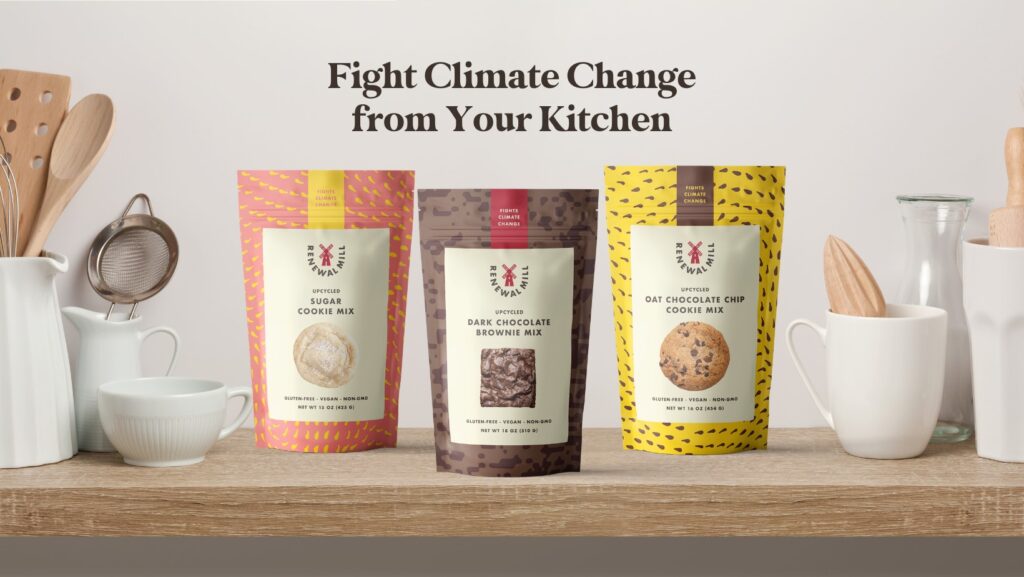
Source: renewal Mill
- Animal Feed from Food Waste: Companies are processing unsold produce and food scraps into nutrient-rich feed for livestock, poultry, and aquaculture, reducing landfill waste while supporting sustainable animal nutrition.
Wastelink, established in 2018 in Delhi, India, is a pioneering company that upcycles food waste into high-quality animal feed ingredients. By collaborating with food producers, Wastelink has processed over 6,000 tons of food waste, converting it into valuable resources for the animal feed industry.
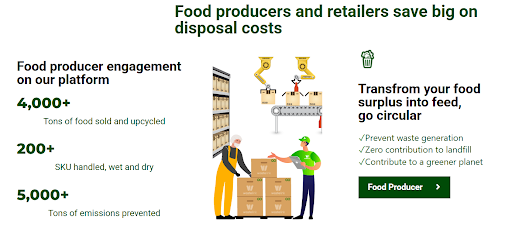
Source: Wastelink
- Mandatory Food Waste Reporting:
- Governments worldwide are enforcing regulations that require businesses to track, measure, and report food waste, promoting transparency and accountability in the supply chain.
2. Sustainable Agricultural Practices
By integrating circular bioeconomy principles, businesses can turn agricultural waste into valuable resources, promoting soil health, biodiversity, and carbon sequestration.
- Bio-Based Oil Production:
- Vertoro converts agricultural residues into 100% bio-based oil, providing a sustainable alternative to fossil fuels.
- Regenerative Agriculture & Agroforestry:
- Companies are investing in soil regeneration, carbon farming, and agroforestry models to enhance biodiversity and restore degraded farmlands.
- GENeco, a UK-based waste recycling and renewable energy company, exemplifies the circular economy in agriculture by converting organic waste into biofertilizers and biogas through anaerobic digestion. Their nutrient-rich biosolids improve soil fertility and plant health, creating a closed-loop agricultural system.
3. Circular Business Models Driving Food Sustainability
Businesses are integrating circular economy principles to maximize resource efficiency, reduce environmental impact, and create new value streams.
- Food Surplus Redistribution:
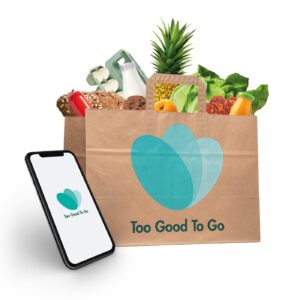
- Too Good To Go – A mobile app that connects consumers with restaurants and retailers offering surplus food at discounted rates, helping reduce food waste while making food more affordable.
Source: Too Good to go
- Industrial Symbiosis & Waste Repurposing:
- Companies are leveraging food waste byproducts to create non-food applications, such as biodegradable packaging, biofuels, and animal feed.
4. Technological Innovations in Circular Practices
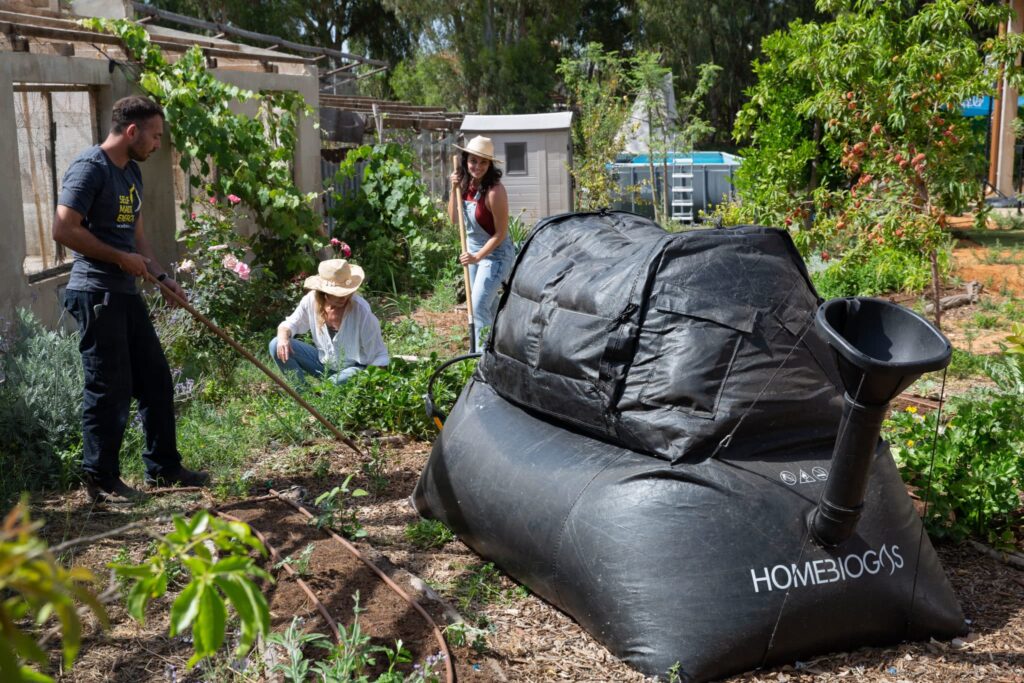
- HomeBiogas Systems
- These modular anaerobic digesters convert food waste into biogas for cooking and liquid fertilizer for gardening. Designed for households and small farms, these off-grid systems reduce landfill waste, cut methane emissions, and provide an affordable renewable energy source.
- These modular anaerobic digesters convert food waste into biogas for cooking and liquid fertilizer for gardening. Designed for households and small farms, these off-grid systems reduce landfill waste, cut methane emissions, and provide an affordable renewable energy source.
Source: Home Biogas
- AI-Powered Waste Analytics
- Smart AI and blockchain-based food tracking systems are enabling real-time monitoring of food waste, helping businesses optimize supply chains and reduce inefficiencies.
Winnow Solutions is a global leader in AI-driven food waste management, helping businesses in the hospitality and foodservice sectors reduce waste and cut costs. Their smart food waste tracking system uses AI-powered cameras and scales to analyze food discarded in commercial kitchens.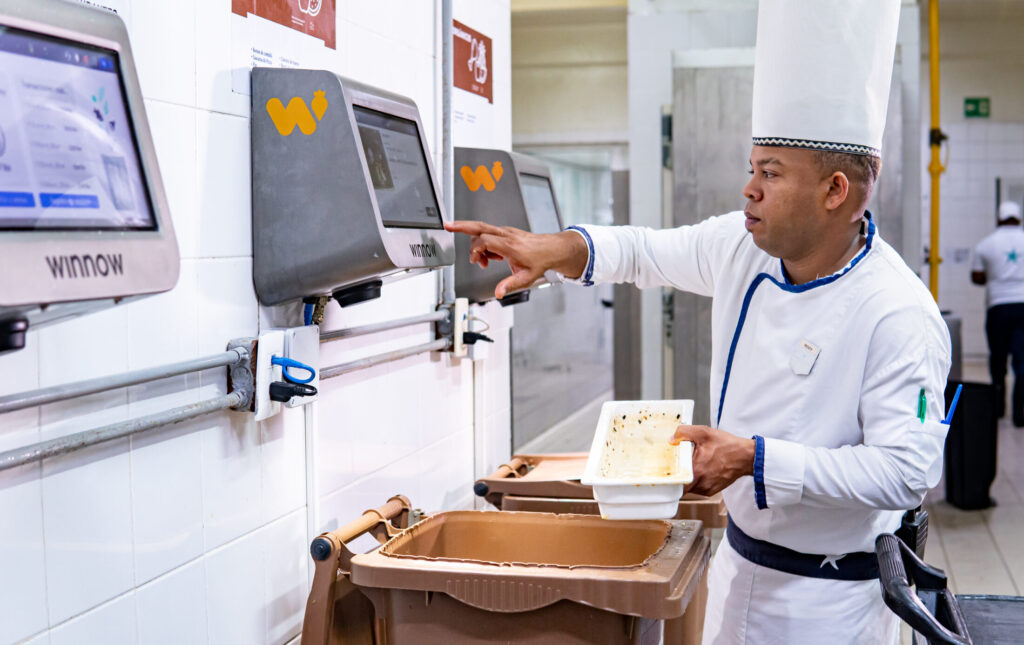 Source: Winnow
- Smart AI and blockchain-based food tracking systems are enabling real-time monitoring of food waste, helping businesses optimize supply chains and reduce inefficiencies.
Challenges in Implementing Circular Food Value Chains
Despite the many advantages, scaling circular food value chains comes with operational, financial, and regulatory challenges:
- Regulatory Barriers – Stricter legal regulations and compliance complexities often slow down the adoption of circular economy models.
- Technological Investment – High upfront costs for infrastructure and technology (e.g., food waste upcycling plants, biorefineries) can be a deterrent.
- Cultural Resistance – Businesses and consumers need behavioral shifts to adopt circular consumption models. Education and incentives play a key role in changing mindsets.
Successful Circular Business Models and Strategies
To overcome these challenges, companies implementing circular economy models often follow these strategies:
✔️ Customer-Centric Business Models
- Businesses align product design and business operations with consumer preferences for sustainability and transparency.
✔️ Collaborative Platforms & Partnerships
- Retailers, food manufacturers, and waste management firms collaborate to maximize resource utilization and reduce food waste across the supply chain.
✔️ Smart Technological Integration
- AI, IoT sensors, and blockchain are being used to track food waste, improve supply chain efficiency, and measure circular impact metrics.
Conclusion & Next Steps
The shift towards circular food value chains is essential for reducing waste, improving sustainability, and driving long-term profitability. Companies that embrace circular economy strategies – from food waste valorization to regenerative agriculture and smart waste management – will lead the future of sustainable food systems.
Want to develop a winning strategy for circular food supply chains?
Take the Next Step
If you’re ready to advance your career in food and agribusiness:
Explore Avila University’s Agribusiness Certificate Programs
Identify the certificate that aligns with your career stage
Connect with admissions advisors to plan your learning pathway
Learn more:
https://www.avila.edu/avila-agribusiness-programs/
Key Takeaways
✔️ Circular food value chains help minimize waste and optimize resource efficiency.
✔️ Business models leveraging upcycling, waste-to-energy, and surplus redistribution are gaining traction.
✔️ Technology-driven solutions (AI, IoT, blockchain) are transforming circular food systems.
✔️ Regulatory support, investment, and cultural shifts are needed to scale circular economy solutions.
💡 The future of food is circular, smart, and sustainable. Is your organization ready to make the shift? 🚀