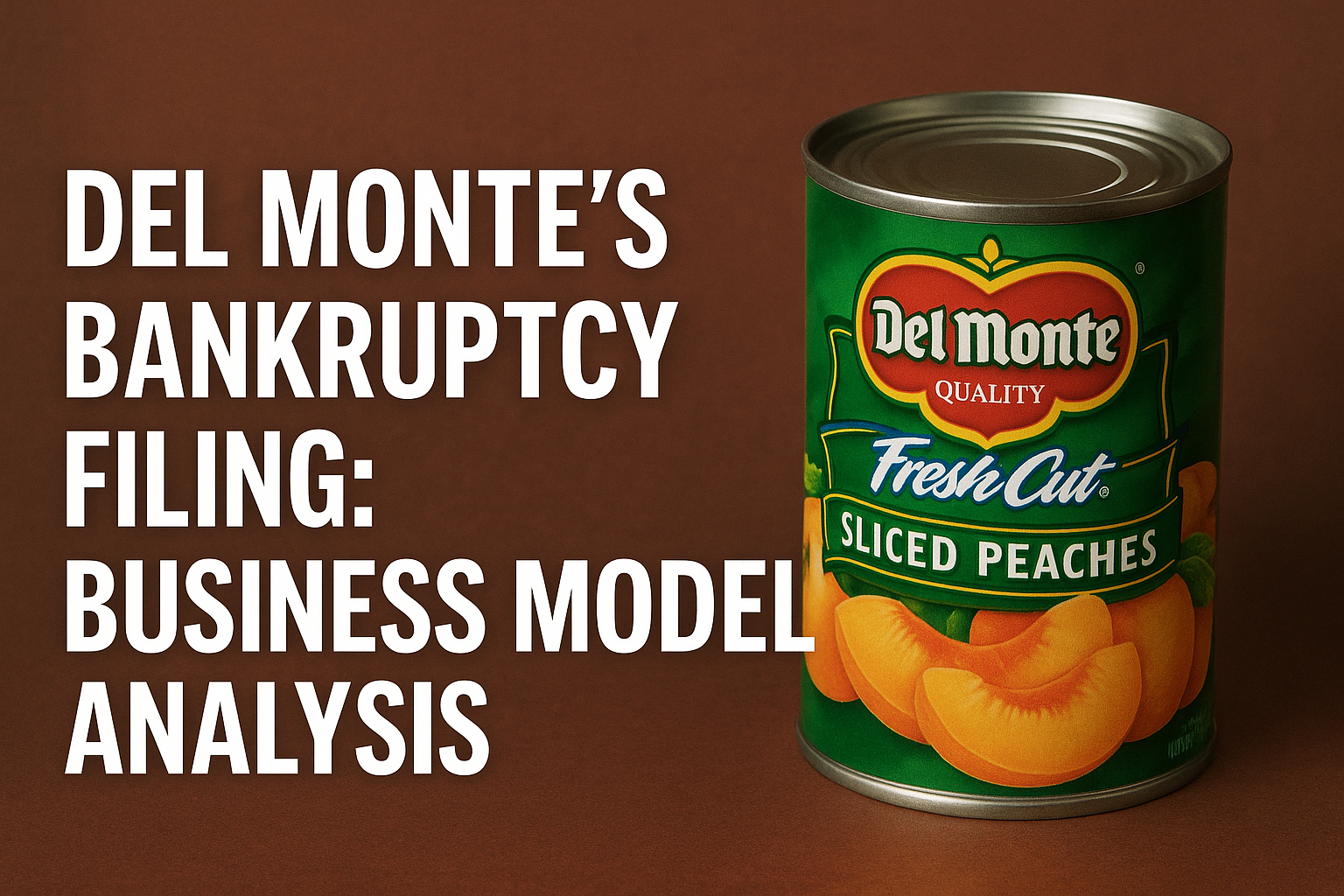
Del Monte’s Bankruptcy Filing: Business Model Analysis of a Shelf-Stable Giant in Decline
⚡ From Supermarket Icon to Strategic Crossroads
Founded in 1886, Del Monte Foods built its legacy as a trusted provider of canned fruits and vegetables. It grew into a household name with an expansive portfolio including Contadina, S&W, College Inn, and newer innovations like Joyba bubble teas. For decades, Del Monte’s recipe for success was clear: shelf-stable convenience, national distribution, and consistent quality.
However, consumer preferences have shifted dramatically.
Today’s buyers seek:
Fresh or minimally processed options
Organic and clean-label ingredients
Sustainable, transparent sourcing
Del Monte’s core offerings—once prized for convenience—now often appear outdated in an era of farm boxes, fresh-cut produce, and ready-to-eat salads. Meanwhile, competitors have rapidly evolved, offering fresher formats, bolder nutrition claims, and more engaging brand stories.
In July 2025, Del Monte filed for Chapter 11 bankruptcy, citing pandemic-related overproduction and a steep drop in demand. The company expanded operations and increased production, anticipating a post-pandemic rebound based on pre-COVID sales expectations. However, consumer behavior shifted sharply post-COVID, with a stronger preference for health-conscious, fresh, and less-processed options.
This led to a challenging financial mismatch—rising debt and inventory levels, paired with weakening demand. But beneath the financial strain lies an opportunity: a need for selective improvements in certain areas of the business model to better align with today’s evolving food landscape.
💼 Reframing Through IFAL’s Business Model Lens
To understand Del Monte’s current position, we turn to the IFAL Business Model Framework, which dissects an agrifood venture across four pillars:
Value Proposition
Distribution Strategy
Complementary Partnerships
Sustainability Integration
Let’s break it down:
🌟 Value Proposition: A Brand Needing Realignment
Del Monte’s historic value proposition revolved around:
Reliable, affordable nutrition
Long shelf life
Trusted household brand
Yet, modern consumers increasingly seek freshness, health benefits, origin transparency, and culinary experience.
While private labels offer cheaper canned goods, and startups offer fresher or plant-based alternatives, Del Monte is actively innovating—through upcycled green beans, carbon-neutral pineapples, and new product formats.
Still, these initiatives signal the need to sharpen and realign the core value proposition to match contemporary preferences more effectively.
🏢 Distribution Strength with Opportunity for Demand Reinforcement
Del Monte still commands robust retail shelf presence in:
Mass market chains like Walmart and Target
Export channels for canned fruits
Foodservice/bulk markets (e.g., schools, institutions)
However, even with this extensive reach, consumer demand patterns are shifting. As younger, health-conscious shoppers lean toward fresh-forward formats, there’s an opportunity to develop new demand-generation strategies that align with changing expectations.
🤝 Complementary Partnerships: Foundations for Flexibility
Del Monte’s strong ecosystem includes partnerships in:
Sustainable sourcing & GHG reporting (e.g., Quantis)
Upcycling & zero-waste initiatives
Product diversification via acquisitions (e.g., Avolio avocado oils)
These collaborations enhance resilience and innovation, and provide a platform to evolve the business model where needed.
🌍 Sustainability: Strong Pillar for Strategic Growth
Del Monte has made commendable strides with:
Upcycled-certified produce lines
Carbon-neutral pineapple programs
Local sourcing within 100 miles
As sustainability becomes more central to consumer choices, these initiatives provide a solid foundation for differentiation. The challenge is to ensure this sustainability message is closely tied to the brand’s overall consumer value promise.
❓ The Turnaround Question
So, where does that leave Del Monte?
The path forward includes a thoughtful review of the business model. Even with strong operations and impactful sustainability efforts, the market signals a need to:
Reposition around health, freshness, and culinary relevance
Develop direct-to-consumer or fresh-forward product lines
Use strategic acquisitions to evolve the brand story
Foster emotional connection and modern brand loyalty
These aren’t criticisms—they’re invitations for Del Monte to build on its legacy and better meet today’s food system expectations.
Take the Next Step
If you’re ready to advance your career in food and agribusiness:
Explore Avila University’s Agribusiness Certificate Programs
Identify the certificate that aligns with your career stage
Connect with admissions advisors to plan your learning pathway
Learn more:
https://www.avila.edu/avila-agribusiness-programs/