Quick answerFood distribution and retail trends describe how grocery moves from packhouse to shopper, and how stores and online orders share that demand. IGD expects the global grocery market to reach US$12.6 trillion by 2030. Online is the fastest-growing channel. In the United States, nearly 94 percent of grocery shoppers in 2025 bought both online and in a store.
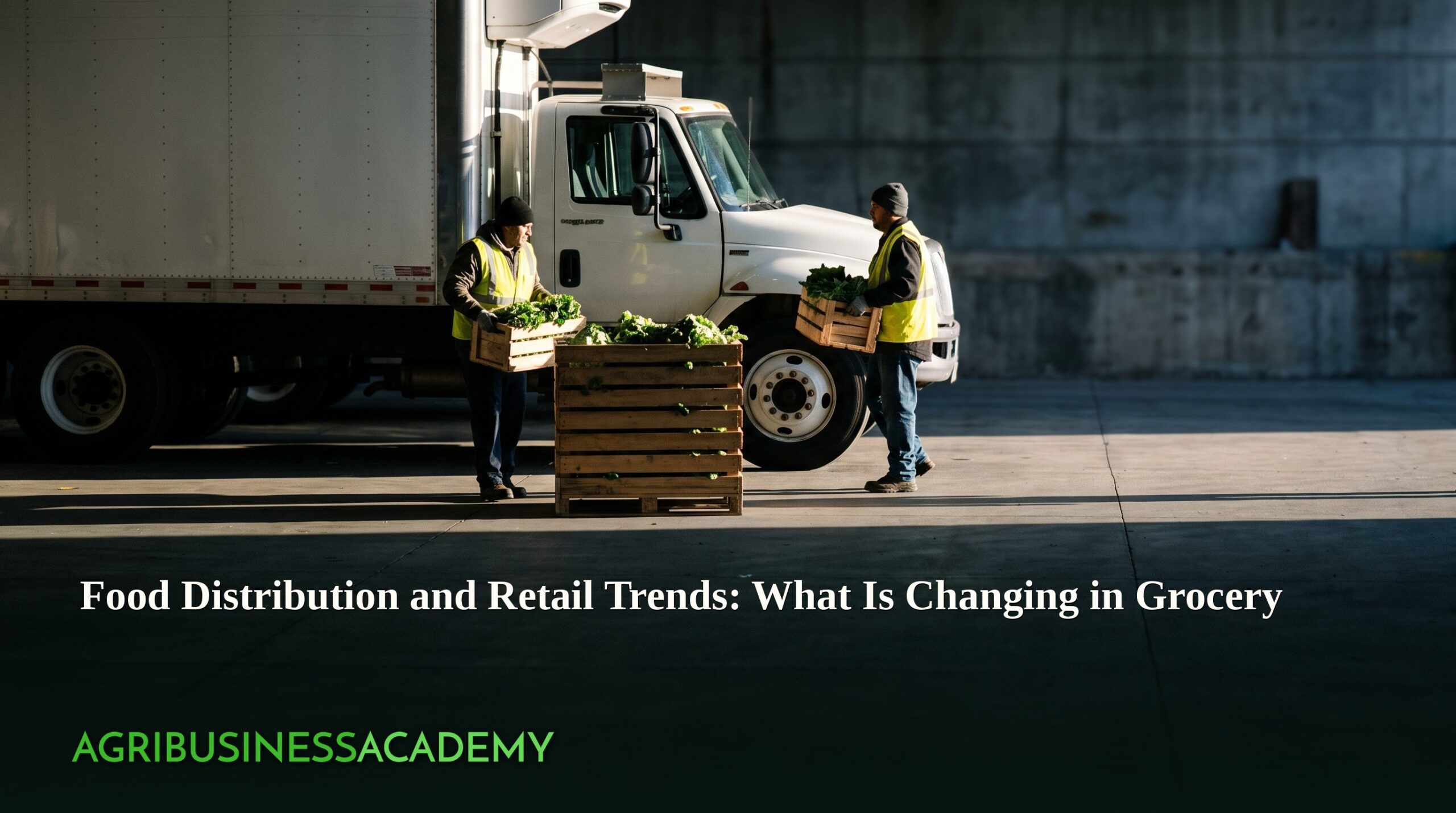
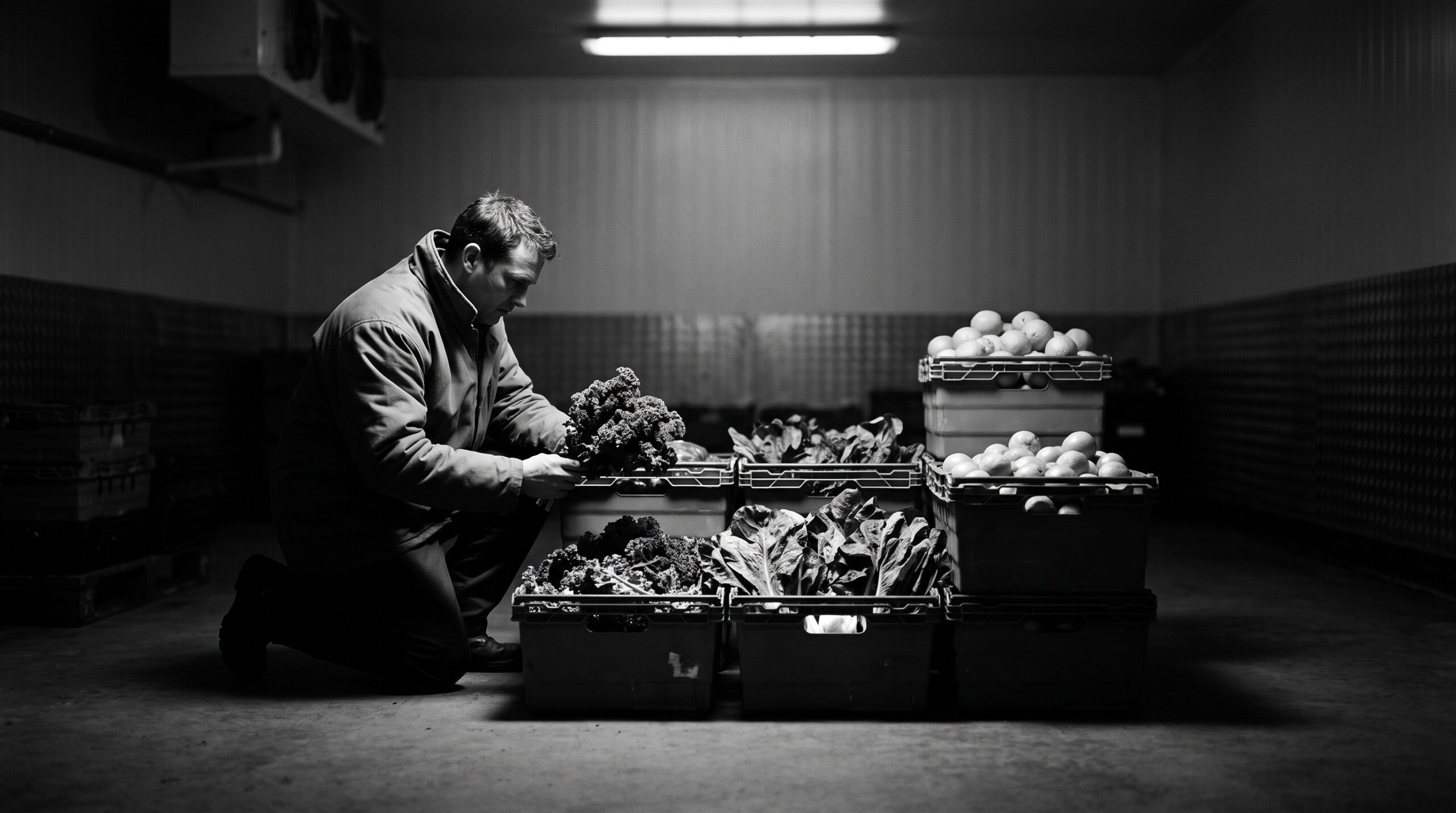
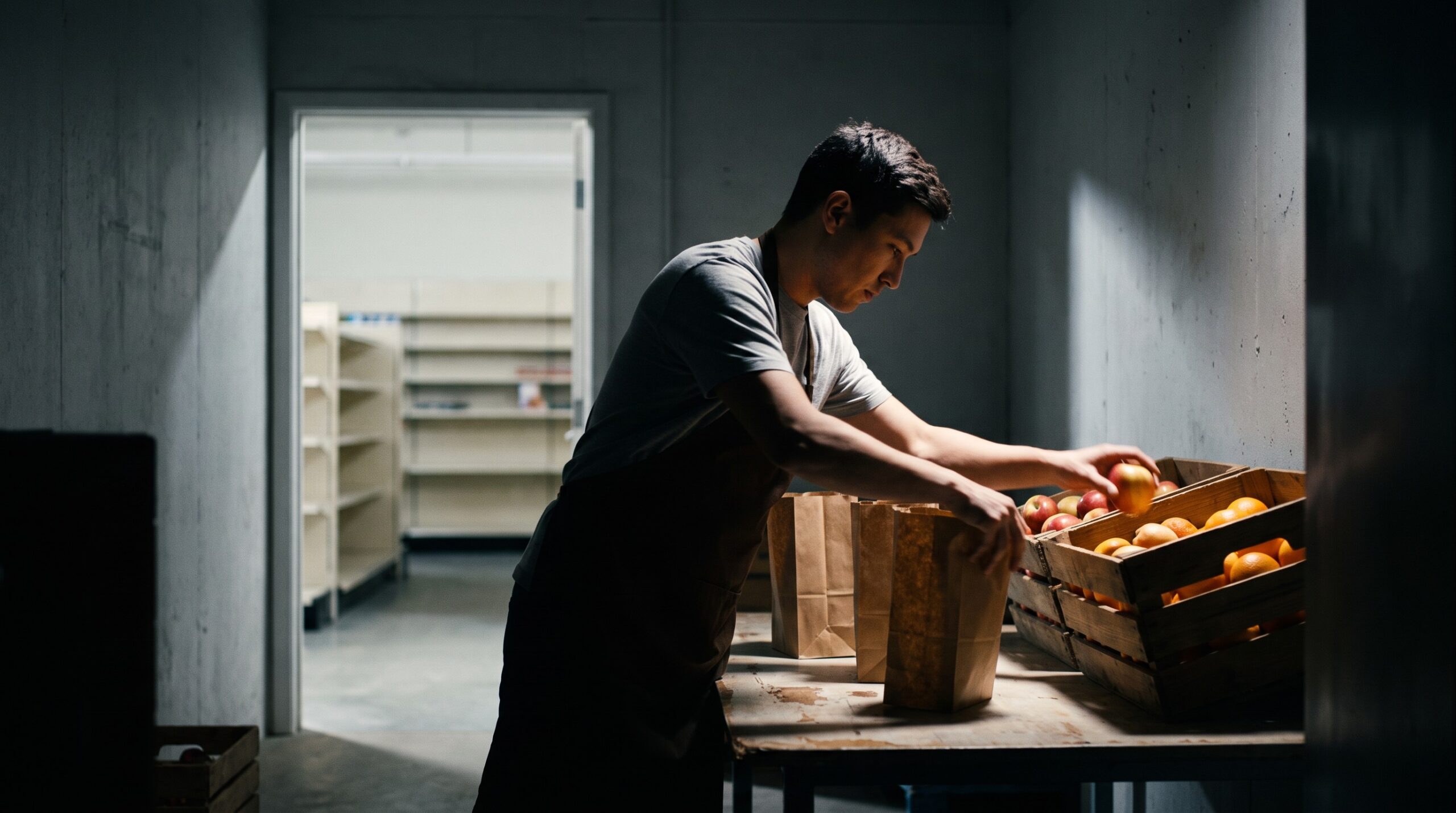
A pallet of leafy greens sits on a regional grocery dock before the store opens. Someone is checking the temperature and the hours left on the route. That is distribution. The same case will be priced, promoted, and picked for an online order before lunch. That is retail. The two jobs used to sit in different meetings. They now share one set of sales.
Agriculture is the production of crops and livestock. Agribusiness is the commercial system around that production: inputs, farms, processing, logistics, finance, and the shopper. Food distribution is how product moves and who holds it. Food retail is how the shopper meets it. A wider look at how those pressures show up across the sector is in Food and Agribusiness Trends and Developments.
What you’ll learn
- Where IGD expects global grocery sales to stand by 2030
- Which channels are gaining share, and which are giving it up
- How US shoppers split a single grocery trip across the store and the screen
- Where cold chain gaps still take food out of the system before it is sold
Where grocery sales are heading
IGD’s forecast, published on 24 November 2025, puts the global grocery market at US$12.6 trillion by 2030. The firm expects that market to add US$2.4 trillion in sales over the five years from 2025, with inflation the main driver in most regions. Value strategies sit at the centre of the plan because a large share of the growth is price, not extra volume.
US$12.6 trillion IGD forecast for the global grocery market by 2030, from its 24 November 2025 outlook.
Asia accounts for 36 percent of global grocery sales by 2030 in that forecast. India, the United States, and China together drive 42 percent of global growth. A distributor reading those shares is looking at where the next pallet is likely to be ordered, and at whether the buyer will pay for service or for a lower price.
GlobalData, in a report dated 22 May 2026, separates the online slice from the whole market. It puts the global online food and grocery market at $925.3 billion in 2025, up 11.2 percent, and expects Asia-Pacific to strengthen its place as the largest food and grocery retail region through 2030. That online total is not the same figure as IGD’s all-channel grocery market. One counts every channel. The other counts the orders that never needed a trolley.
How US shoppers actually buy
FMI, The Food Industry Association, and NIQ published their Digital Engagement Transforms Grocery Shopping 2026 report on 22 April 2026. They expect total US online grocery sales to reach $452 billion by 2028. Online grocery sales are projected to grow at 11.6 percent a year through 2028, and they already account for about one-fifth of total US grocery spending.
$452 billion FMI and NIQ forecast for US online grocery sales by 2028, from their 22 April 2026 report.
In 2025, online sales contributed close to 75 percent of total US grocery dollar growth, while in-store sales stayed relatively stable. Online food sales jumped nearly 19 percent that year. Nearly 94 percent of grocery shoppers in 2025 bought both online and in a store. FMI also notes that average delivery times have fallen sharply since 2018, and that shoppers increasingly expect same-day or next-day delivery for food.
For a grower, a packer, or a category manager, that mix changes the order. A case that used to move on a store planogram now also has to survive a pick in a back room, a photo on a screen, and a delivery window. The product specification, the pack size, and the temperature record all have to work for both routes.
Where the route still loses food
Maersk, citing the UNEP Food Waste Index Report 2024, says almost one-fifth of the world’s food supply is lost or wasted each year, at a cost of roughly US$1 trillion. The same note separates two problems. Food waste happens at retail and in the home, when edible food is thrown out. Food loss happens earlier, in harvest, processing, transport, or storage, when food spoils before a retailer receives it.
Cold chain is the tool for that earlier loss. Maersk describes last-mile inefficiency even in markets that already have refrigerated capacity, and a harder set of gaps in emerging economies: limited roads, intermittent power, thin cold-chain investment, and limited technical skill. Produce that is not cooled within a few hours of harvest in a hot climate starts to spoil before it reaches a highway. A guide to the interventions that cut that loss is Reducing Food Losses and Waste. How sustainability shows up across the chain is in Sustainable Food Supply Chains Training.
The commercial test for a route to market
A forecast does not tell a team whether their own route still works. Four questions do.
Original diagram, Institute of Food and Agribusiness Leadership. The same four components are in the free ebook.
Value proposition. Who is the shopper this week, and why do they choose this offer? A household chasing a lower basket, a household paying for same-day delivery, and a foodservice buyer locking a programme are three different customers. The listing that wins is the one that matches the reason they are buying.
Distribution strategy. Store, discount, online pickup, and home delivery are different routes. A pack that fits a hypermarket shelf can fail in a dark store, where the pick has to be fast and the photo has to be honest. IGD’s channel shift is a prompt to check whether the route still matches the volume.
Chain partnerships. Cooling, freight, grading, and the retailer’s pick operation are often another firm’s job. The useful manager knows which partner covers which gap, and does not promise a delivery window the cold store cannot keep.
Sustainability. The route has to survive the next heat wave, the next border delay, and the next jump in the price of fuel or power. A cheap offer that arrives out of grade is a short piece of business. The lost food Maersk describes is a margin problem as well as a waste problem.
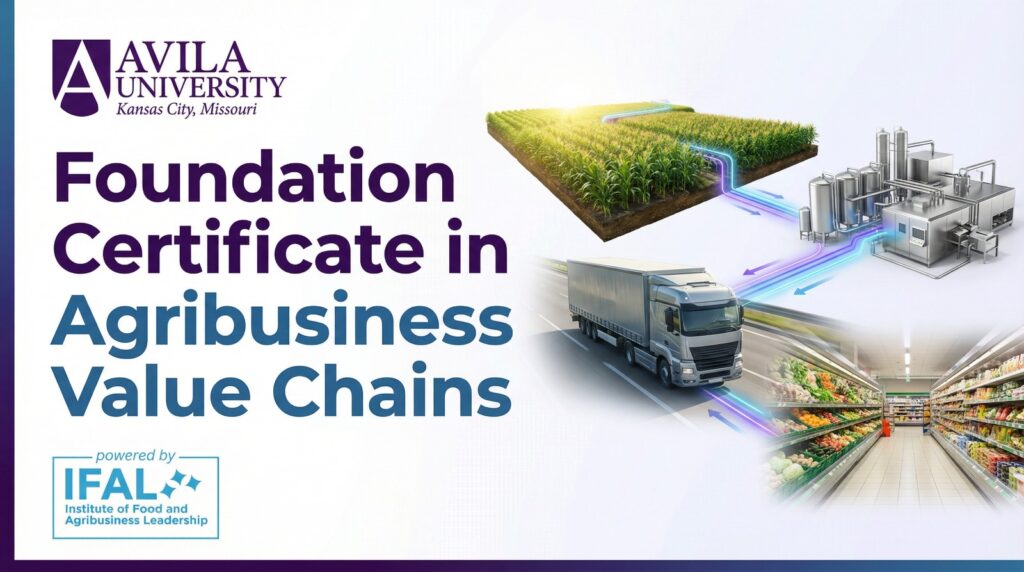
People who already work in distribution, retail, or supply and want this commercial layer in a structured way can take the Foundation Certificate in Agribusiness Value Chains. It is about 45 hours, AI-coached, priced at $499, and co-issued with Avila University. It teaches these four components.
Final takeaway
Food distribution and retail trends now meet in one place: a case of food has to survive the route and still be easy to buy, in a store or on a screen. IGD’s path to a US$12.6 trillion grocery market by 2030 runs through Asia, through India, the United States, and China, and through online and discount channels. FMI and NIQ show US shoppers already using both the store and the screen. The food that never arrives is still a distribution problem.
The free ebook Food and Agriculture Business Models uses the same four components on real agrifood companies. It is free to start, with no signup, and it draws on 15+ years of research, 300+ business models, and 30+ countries.
Frequently asked questions
What are food distribution and retail trends?
They are the shifts in how grocery moves from producer to shopper, and in how stores, discount formats, and online orders share that demand. IGD’s 2025 to 2030 forecasts and the April 2026 FMI and NIQ US grocery report are two current pictures of those shifts.
How large is the global grocery market?
IGD forecasts a global grocery market of US$12.6 trillion by 2030, adding US$2.4 trillion in sales over the five years from 2025. Inflation is the main driver in most regions. GlobalData separately puts the global online food and grocery market at $925.3 billion in 2025.
Is online grocery replacing the store?
In the United States, FMI and NIQ say nearly 94 percent of grocery shoppers in 2025 bought both online and in a store. Online sales are expected to reach $452 billion by 2028 and already account for about one-fifth of US grocery spending. The store is still where most food is bought. Online is where most of the dollar growth came from in 2025.
Why does cold chain matter to retail trends?
Retail growth does not help a grower if the product spoils before the store receives it. Maersk, citing the UNEP Food Waste Index Report 2024, says almost one-fifth of the world’s food supply is lost or wasted each year. Food loss, earlier in the chain, is the part cold storage and faster cooling are meant to cut.
Which grocery channels are gaining share?
IGD says online is the fastest-growing global channel through 2030, at a 7.6 percent compound annual growth rate, and that discount is the only physical channel gaining share. Supermarkets and hypermarkets lose share even as they still contribute most net new sales.
Free to start. No signup.
Read the ebook
15+ years, 300+ business models, 30+ countries. The same four components, on real agrifood companies.