The Economics and ROI for Advanced Grain Cooling in India: A Smart Investment for a Food Secure Future
The Heavy Price of Traditional Storage in India 📉
Despite India’s immense agricultural output (over 330.5 million metric tonnes of food grains in 2022-23), the country faces staggering post-harvest losses. A comprehensive study by NABCONS (2022) revealed an annual loss of ₹1.53 lakh crore (approximately US$18.5 billion) in crops and agri-allied produce. This isn’t just wasted food; it’s lost income for farmers, a drain on national resources, and a challenge to food security. 💰
Traditional storage methods, prevalent across the country, from jute bags to mud structures (kothis, morais) and open-air Cover and Plinth (CAP) storage, are inherently vulnerable to India’s challenging climatic conditions and pest pressures:
- High Humidity & Temperatures: India’s tropical and subtropical climate, with its high temperatures and monsoon-driven humidity, creates ideal conditions for moisture migration, mold growth, and rapid insect proliferation.
- Pest Infestation: Rodents, insects (like khapra beetle, rice weevil), and birds cause significant quantitative and qualitative damage. Traditional methods offer minimal protection, often necessitating costly and environmentally questionable chemical fumigation.
- Quality Deterioration: High moisture and temperature lead to discoloration, reduced germination, caking, and overall degradation of grain quality, significantly diminishing its market value, especially for premium varieties like Basmati rice. The Grainchat YouTube channel emphasizes that proper grain storage is critical in preventing weevil infestations and the need for fumigation.
- Vulnerability to Weather: Open or semi-open storage methods are highly susceptible to damage from unseasonal rains, floods, and heatwaves.
These cumulative losses not only reduce available food but also erode farmer profitability, inflate market prices, and impede India’s journey towards sustainable food systems. 🐛🚨
[Picture Suggestion]: An image contrasting traditional Indian grain storage methods (e.g., jute bags in a godown or CAP storage) with a modern, sealed silo.
The Investment in Excellence: Modernizing Grain Storage 🏗️
Adopting advanced grain cooling technology, often integrated with modern silo systems, represents a significant capital investment. The cost varies based on scale (from small farm-level solutions to large commercial facilities), specific technology (e.g., mini-chillers vs. large industrial units), and existing infrastructure. However, this investment should be viewed as a long-term asset, providing reliable protection and value addition for decades.
Critically, the Government of India is aggressively promoting and incentivizing modern storage infrastructure. The ambitious “World’s Largest Grain Storage Plan in Cooperative Sector” aims to add 700 lakh metric tonnes (70 million MT) capacity over the next five years with an investment of over ₹1.25 lakh crore (approx. US$15 billion). This massive push directly supports the adoption of advanced solutions like grain cooling.
The Pillars of ROI: Why Chilling Pays Off in India 📈
Advanced grain chilling offers a compelling Return on Investment by directly addressing India’s unique challenges and unlocking new opportunities:
- Dramatic Reduction in Post-Harvest Losses: Preserving National Wealth! 🏆
Chilling directly combats the high losses by maintaining optimal low temperatures (e.g., 10-15°C) and controlled humidity. This effectively:- Stops Insect Infestation: Low temperatures prevent insect reproduction and activity, eliminating the need for costly and recurring chemical fumigation, directly saving the value of grain that would otherwise be lost to pests.
- Inhibits Mold & Mycotoxins: By controlling both temperature and moisture migration, chilling prevents the growth of harmful molds and the formation of mycotoxins (like aflatoxin), ensuring food safety and preventing rejection of valuable grain.
- Minimizes Respiration Losses: Grains “breathe” less at lower temperatures, preserving their dry matter, weight, and nutritional value. The Grainchat channel highlights the economic significance of understanding and controlling water loss during storage.
- Quantifiable Savings: By reducing losses from the typical 10-18% range to negligible levels (e.g., less than 1-2%), the value of the saved grain far outweighs the operational costs of chilling. For every ton of grain saved, it’s direct revenue that would otherwise be lost.
- Premium Quality & Enhanced Market Access 🌟
India’s agricultural diversity includes high-value crops like Basmati rice. Chilling preserves this quality:- Prevents Discoloration & Quality Degradation: For grains like Basmati rice, chilling prevents the yellowing or browning often seen in hot storage, maintaining its natural white color and aromatic profile, crucial for premium export markets.
- Improved Milling Yield: By preserving kernel integrity and preventing brittleness from pest damage or moisture fluctuation, chilling can lead to a higher head rice yield (more unbroken kernels after milling). This means more high-value product from the same paddy quantity.
- Meets International Standards: Consistent quality enables Indian produce to meet stringent international import standards, opening doors to lucrative global markets and strengthening India’s position as a reliable exporter.
- Lower Operational Costs & Increased Efficiency 💰
The long-term operational economics of advanced cooling are highly favorable:- Reduced Fumigation Costs: Eliminating the need for repeated chemical fumigation saves directly on chemical purchases, labor, and compliance.
- Efficient Energy Use: Modern grain chillers are designed for energy efficiency, often requiring only initial cooling cycles followed by minimal re-chilling. Their operational costs are typically lower than the combined burden of traditional aeration and chemical treatments.
- Less Re-Drying: By controlling moisture, chilling reduces the need for expensive and energy-intensive re-drying processes.
- Market Flexibility & Strategic Trading 📊
- Extended Storage Period: Chilling allows safe storage for much longer durations, empowering farmers, traders, and processors to hold their produce and sell when market prices are most favorable, avoiding distress sales during peak harvest glut.
- Value Addition & Processing: The ability to store large quantities of high-quality grain sustainably is a prerequisite for developing India’s domestic agro-processing industry, enabling the country to export processed products rather than just raw materials.
Case Study: The Small Farmer’s Success with Modern Storage in Punjab 🚀
While large corporations benefit immensely from advanced grain cooling, its principles are equally transformative for micro-enterprises and individual small farmers in India. Let’s consider a hypothetical yet realistic scenario:
Scenario: Meet Rajesh Kumar, a progressive small farmer in Punjab, owning 5 acres and growing high-quality Basmati rice and wheat. He typically harvests around 25 metric tons (MT) of paddy rice and 20 MT of wheat annually.
The Pre-Modernization Challenge:
Rajesh traditionally stored his grain in his modest kothi (mud structure) and jute bags in a small shed. He faced recurring issues:
- Significant Losses: Despite his best efforts, Rajesh estimated 10-15% of his grain was lost to pests (weevils, rodents), mold, and moisture damage within 4-6 months of storage. For 25 MT of paddy, this meant 2.5-3.75 MT of lost grain. For 20 MT of wheat, it was 2-3 MT lost.
- Quality Degradation: His Basmati rice often suffered slight discoloration and aroma loss, preventing him from fetching top market prices. His wheat sometimes had insect-damaged kernels, lowering its grade.
- Distress Sales: To avoid further losses, Rajesh often had to sell a large portion of his harvest immediately after procurement, when market prices were typically at their lowest due to high supply. This meant missing out on price increases later in the season.
- Recurring Fumigation Costs: He periodically used local pesticides to control insects, incurring small but regular expenses and potential health risks.
The Smart Investment:
Encouraged by government schemes and a local farmers’ producer organization (FPO), Rajesh invested in a 100 MT capacity prefabricated steel silo on his farm. While a dedicated large-scale chiller might be excessive for his individual capacity, he chose a silo designed with advanced aeration features and temperature monitoring, which allows for controlled air circulation to manage temperature and humidity effectively – a fundamental principle of grain cooling. The total investment for this small-scale silo, including a high-efficiency aeration fan and basic temperature sensors, was approximately ₹15 lakh (approx. US$18,000), partially subsidized by a government scheme.
Cost vs. Savings & ROI – An Illustrative Look (for 45 MT total grain):
Let’s assume:
- Average paddy price: ₹25,000/MT (US$300/MT)
- Average wheat price: ₹23,000/MT (US$275/MT)
- Average price of total grain handled: (25*₹25,000 + 20*₹23,000) / 45 = ₹24,111/MT (approx. US$290/MT)
- Avoided Quantity Loss: By reducing storage losses from an average 12.5% to a negligible 1%, Rajesh saved 11.5% of 45 MT, which is 5.175 MT of grain.
- Monetary Savings from Loss Reduction: 5.175 MT * ₹24,111/MT = ₹1.25 lakh (approx. US$1,500) annually.
- Value from Quality Preservation: By maintaining the pristine quality of his Basmati rice and wheat, Rajesh could consistently achieve a 5% price premium due to better appearance, aroma, and lack of damage.
- Monetary Gain from Quality Premium: (45 MT * ₹24,111/MT) * 5% = ₹0.54 lakh (approx. US$650) annually.
- Market Arbitrage (Selling Later): The ability to store safely for 6-8 months allowed Rajesh to sell his grain later in the season (e.g., 3-4 months post-harvest), when market prices typically increased by 10%.
- Monetary Gain from Delayed Sale: (45 MT * ₹24,111/MT) * 10% = ₹1.08 lakh (approx. US$1,300) annually.
- Operational Cost of Silo (Aeration & Maintenance): The electricity for the fan and basic maintenance for a smaller system would be minimal, estimated at ₹5,000 (approx. US$60) annually. He also saved on minor fumigation costs.
The Compelling ROI for Rajesh Kumar:
- Total Annual Savings/Gains: ₹1.25 lakh (Loss Reduction) + ₹0.54 lakh (Quality Premium) + ₹1.08 lakh (Market Arbitrage) = ₹2.87 lakh (approx. US$3,450) annually.
- Net Annual Benefit (after operational cost): ₹2.87 lakh – ₹5,000 = ₹2.82 lakh (approx. US$3,390) annually.
With an initial investment of ₹15 lakh (US$18,000) and an annual net benefit of over ₹2.82 lakh (US$3,390), Rajesh’s investment in the modern silo with cooling-enabled aeration had a payback period of roughly 5.3 years. Given the silo’s lifespan of 20-30 years, this translates to decades of consistent, significant additional income.
The Outcome:
Rajesh Kumar not only secured his harvest from spoilage but also significantly boosted his income, allowing him to invest further in his farm. His success story inspired neighboring farmers to explore similar modern storage solutions, demonstrating that advanced grain cooling, even at a micro-level, is a powerful tool for individual prosperity and contributes directly to India’s food security goals.
Government Support: Catalyzing the Investment and Accelerating ROI 🤝
The Indian government is a proactive partner in this transformation, significantly de-risking and accelerating the ROI for modern grain storage. The “World’s Largest Grain Storage Plan in Cooperative Sector,” targeting an ambitious 700 lakh metric tonnes (70 million MT) capacity over the next five years with an investment of over ₹1.25 lakh crore (approx. US$15 billion), is a testament to this commitment. 🇮🇳
Key schemes offering crucial financial assistance include:
- Agricultural Infrastructure Fund (AIF): Provides a 3% interest subvention for projects up to ₹2 crore (US$240,000), making financing more accessible. As of July 2024, the AIF has sanctioned over ₹11,258 crore (approx. US$1.35 billion) for warehouses, demonstrating active support.
- Agricultural Marketing Infrastructure (AMI) Scheme: Offers a substantial 25% to 33.33% back-ended capital subsidy for eligible beneficiaries. Since its inception, the AMI scheme has supported 48,512 storage infrastructure projects with a capacity of 93.99 lakh MT (9.4 million MT), releasing ₹4,734.73 crore (approx. US$567.5 million) in subsidies. These subsidies are particularly beneficial for small and marginal farmers, and FPOs.
- NABARD’s Warehouse Infrastructure Fund (WIF): Has sanctioned over ₹9,476 crore (approx. US$1.14 billion) for 8,172 projects, creating 13.74 lakh MT (1.37 million MT) of modern storage capacity, with over ₹9,094.74 crore (approx. US$1.09 billion) already disbursed.
These policies significantly reduce the financial burden of initial investment, making the ROI of advanced cooling even more attractive and achievable for a wider range of stakeholders, from individual farmers to large cooperatives. The current storage capacity in India, at only 47% of production, starkly contrasts with countries like the US (161%) or China (107%), highlighting the massive potential for growth and investment in this sector.
The Bottom Line: A Resilient, Profitable Future 🎯
The economics unequivocally support the adoption of advanced grain cooling in India. The substantial financial savings from dramatically reduced losses (addressing that ₹1.53 lakh crore (US$18.5 billion) annual loss), the premium gained from superior grain quality, and lower long-term operational costs, collectively generate a compelling ROI. When coupled with proactive government initiatives for modern storage, the investment in advanced grain chilling becomes not just viable, but a strategic imperative for profitability and long-term sustainability for India’s vital agricultural sector.
Investing in advanced cooling is investing in India’s food security, empowering its farmers, bolstering its agribusinesses, and ensuring a resilient, prosperous future for its agricultural sector. It’s about turning potential losses into tangible gains, one perfectly preserved kernel at a time.
Take the Next Step
If you’re ready to advance your career in food and agribusiness:
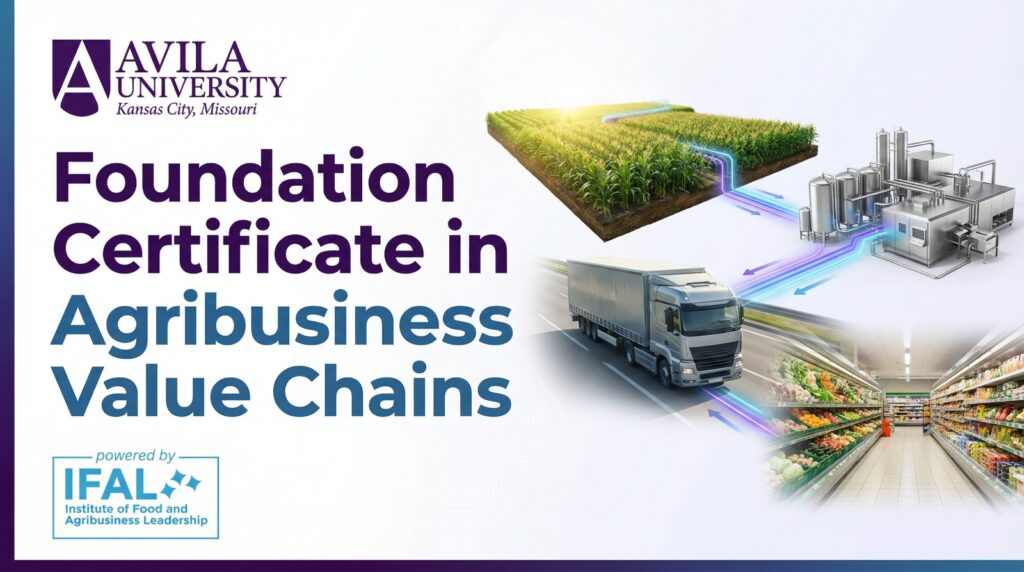
Explore Avila University’s Agribusiness Certificate Programs
Identify the certificate that aligns with your career stage
Connect with admissions advisors to plan your learning pathway
Learn more:
https://www.avila.edu/avila-agribusiness-programs/