The Business of Organic and Regenerative Agriculture: A Comprehensive Guide
Estimated reading time: 10 minutes
Key Takeaways
-
- Organic agriculture focuses on sustainable practices that promote soil health, biodiversity, and ecosystem balance.
-
- Regenerative agriculture goes beyond organic by actively improving farm ecosystems through soil health and integrated practices.
-
- The business of organic and regenerative agriculture offers economic benefits including higher price premiums and enhanced long-term soil value.
- Integrating organic and regenerative practices can lead to profitable and sustainable agricultural enterprises.
To deepen your understanding of the business and economic aspects of organic and regenerative agriculture, explore the Mini MBA in Sustainable Food Supply Chains. This program provides strategic insights and practical frameworks to help you navigate the evolving landscape of sustainable agribusiness.
Table of Contents
The agricultural landscape is experiencing a profound transformation as sustainable practices reshape modern farming. The business of organic and regenerative agriculture represents a pivotal shift in how we produce food, combining profitability with environmental stewardship. This emerging agricultural model isn’t just about growing food differently – it’s about reimagining the entire business of farming for a sustainable future. Sustainable Farming Practices: The Future of Agriculture in India
With growing consumer demand for sustainably produced food, the organic and regenerative agriculture business sector presents unprecedented opportunities for farmers and entrepreneurs alike.
In this comprehensive guide, we’ll explore how businesses can successfully integrate organic and regenerative practices, understand market dynamics, and build profitable, sustainable agricultural enterprises.
Understanding the Business of Organic Agriculture
Organic agriculture represents more than just avoiding synthetic chemicals. It’s a holistic production system that sustains the health of soils, ecosystems, and people. According to the Organic Council, this approach relies on ecological processes, biodiversity, and cycles adapted to local conditions, rather than harmful inputs.
Core Principles of Organic Agriculture
-
- Zero synthetic fertilizers and pesticides
-
- Active promotion of biodiversity
-
- Natural soil fertility maintenance
-
- Strong focus on animal welfare
-
- Emphasis on local ecosystem health
The business case for organic farming is compelling. While conventional agriculture focuses on maximizing short-term yields, organic farming builds long-term sustainability while commanding premium prices. Certified organic products often sell for 20-30% more than conventional alternatives, offsetting potential yield reductions during the transition period. Agribusiness Value Chain Training: A Comprehensive Guide to Success
Economic Benefits
-
- Higher price premiums for certified products
-
- Reduced input costs
-
- Multiple income streams through crop diversity
-
- Enhanced long-term soil value
-
- Growing market demand
Source: https://organiccouncil.ca/the-business-of-organic-regenerative-agriculture/
Exploring Regenerative Agriculture Models
Regenerative agriculture takes organic farming a step further by focusing on actively improving the farm ecosystem. This approach emphasizes soil health, water management, and holistic farming practices that enhance rather than merely sustain environmental conditions.
The integration of organic and regenerative agricultural practices has proven to be both environmentally sustainable and economically viable. Several case studies from around the world exemplify successful implementations of these practices:
Eosta (Netherlands): Pioneering Organic Agriculture

Eosta, a Dutch company, has been at the forefront of promoting organic agriculture. Their approach aligns with the Sustainable Development Goals (SDGs), emphasizing sustainable farming practices that minimize environmental impact while ensuring food security. Eosta’s commitment to organic agriculture showcases how businesses can operate profitably while adhering to ecological principles.
Read our full analysis of Eosta business model
Natural Farming in Andhra Pradesh, India: A Community-Driven Approach
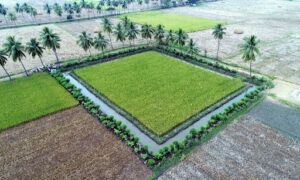
In Andhra Pradesh, India, the Community Managed Natural Farming (APCNF) program has revolutionized agricultural practices. Launched by Rythu Sadhikara Samstha (RySS), a state-run organization, APCNF aims to transition six million farmers to natural farming methods by 2027. This approach eliminates synthetic fertilizers and pesticides, relying instead on natural inputs to enhance soil fertility and crop resilience. Studies have shown that farms utilizing natural inputs achieved equal or higher yields compared to conventional methods, with an average increase of 11%, all while maintaining greater crop diversity. Furthermore, the program has led to improved farmer livelihoods, with net incomes averaging 49% higher, better health outcomes, and stronger communities.
Puris (USA): Leading in Plant-Based Protein Production

Puris, based in the USA, is a notable example of a company embracing regenerative agriculture. As a leading producer of plant-based proteins, Puris emphasizes sustainable farming practices that improve soil health and reduce environmental impact. Their commitment to regenerative agriculture not only supports environmental sustainability but also meets the growing consumer demand for plant-based protein sources.
Key Components of Regenerative Agriculture
-
- Minimal soil disturbance
-
- Maximized crop diversity
-
- Continuous soil coverage
-
- Year-round living roots
-
- Integrated livestock management
Proven Regenerative Models
Several proven regenerative models have emerged:
Holistic Management
-
-
- Planned grazing systems
- Natural herd movement simulation
- Enhanced soil fertility cycles
-
Permaculture
-
-
- Natural ecosystem design
- Self-sufficient system creation
- Integrated land use planning
-
Agroforestry
-
-
- Tree and crop integration
- Enhanced biodiversity
- Improved microclimate control
-
No-till/Minimum Tillage
-
-
- Preserved soil structure
- Increased organic matter
- Better water retention
-
Cover Cropping
-
-
- Soil protection between seasons
- Natural weed suppression
- Enhanced fertility cycling
-
Take the Next Step
If you’re ready to advance your career in food and agribusiness:
Explore Avila University’s Agribusiness Certificate Programs
Identify the certificate that aligns with your career stage
Connect with admissions advisors to plan your learning pathway
Learn more:
https://www.avila.edu/avila-agribusiness-programs/