The Changing Face of India’s Jaggery Industry: Can Clean-Tech Models Like SEDL’s Drive Sustainability?
India’s jaggery value chain is at a crossroads.
Once purely traditional and decentralized, it’s now seeing the rise of industrial innovation aimed at tackling long-standing issues—carbon emissions, inefficiency, and biomass waste. One company—Spray Engineering Devices Ltd. (SEDL)—is pioneering a zero-emission agro-industrial model that’s sparking renewed interest in the sustainability potential of sugarcane.
But can such innovation truly be a gamechanger for India’s jaggery industry? Let’s break it down.
 Overview of the Jaggery Industry in India
India is the world’s largest producer and consumer of jaggery, accounting for over 70% of global output. The value chain is especially important in Uttar Pradesh, Maharashtra, Karnataka, Tamil Nadu, and Kerala, where jaggery processing supports millions of rural livelihoods.
The Traditional Value Chain:
Sugarcane is harvested and crushed using kolhus or small-scale crushers.
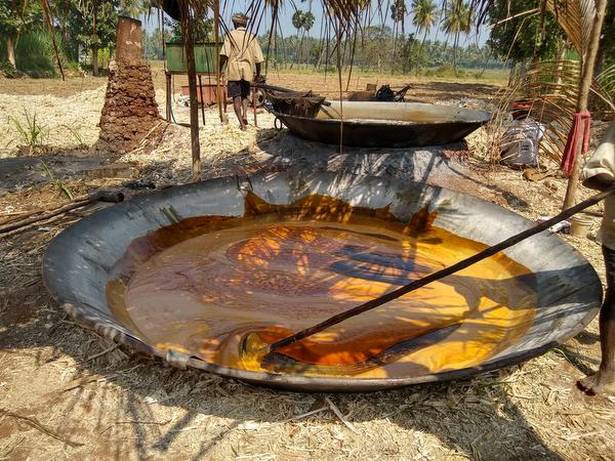
Juice is filtered and boiled—often using bagasse as the main fuel.
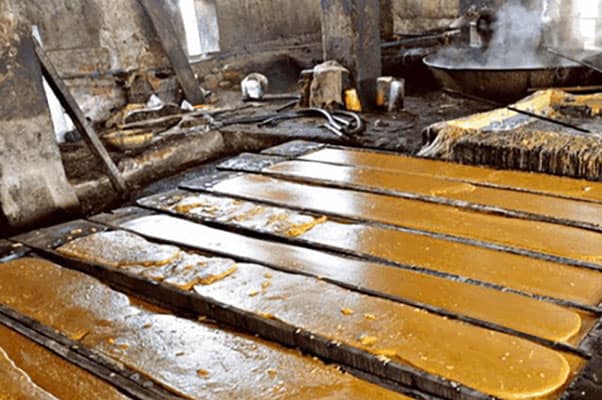
The concentrated syrup is poured into moulds to form jaggery blocks.
Jaggery is sold through local markets or intermediaries.
While this method has worked for generations, it faces serious limitations when evaluated against today’s sustainability and efficiency metrics.
 https://www.indiamart.com/proddetail/jaggery-20233623473.html
 Challenges in Sustainability
The traditional jaggery value chain poses several environmental and operational challenges:
 Emissions from Bagasse Burning:
Bagasse, the fibrous residue left after juice extraction, is burned to boil sugarcane juice.
This results in high levels of smoke, PM emissions, and local air pollution.
 Water Misuse:
Large volumes of water are needed during processing, often drawn from groundwater sources with no recycling mechanism.
 Low Efficiency & Farmer Returns:
Manual processing = low shelf life, poor hygiene, and market rejections.
Farmers remain price takers, unable to benefit from premium or global markets.
 SEDL’s Clean-Tech Innovation: What It Brings
SEDL has launched a fully integrated, zero-emission jaggery processing plant in Bamungaon, Assam.
 Key Features:
Boiler-less system using Low Temperature Evaporation (LTE) technology.
No burning of bagasse – energy use is solar-based, with minimal external inputs.
Closed-loop water system – water recovered during processing is recycled and used to irrigate organic sugarcane fields.
Carbon neutral operations by design.
Produces high-quality jaggery and co-products, including feedstock for biofuel and bioplastics.
 This model processes 180,000 tonnes of sugarcane annually and saves nearly 60,000 tonnes of bagasse from combustion.
 Carbon Credit Potential for Farmers
A key opportunity arising from SEDL’s system is its potential to enable carbon credit income for organic sugarcane growers and processing partners.
How This Works:
By eliminating fuel combustion and capturing/reusing water, the system creates verifiable carbon savings.
If linked with traceable organic farming clusters, these savings could be quantified and sold as carbon offsets through voluntary carbon markets.
Farmer Producer Organizations (FPOs) and contract farmers could receive a share of the carbon revenue in addition to their crop value.
The Challenge:
Measurement, Reporting & Verification (MRV) needs to be standardized and transparent.
Current policy support for carbon market linkage in agriculture is still in early stages.
Aggregator or ecosystem player (like SEDL) must facilitate data capture and credit registration.
If executed well, carbon finance can become a breakthrough incentive that makes organic farming and clean processing commercially viable for growers.
 Turning Bagasse into Biofuel: Promise vs. Challenge
One of SEDL’s long-term goals is to channel unused bagasse into the green hydrocarbon market, including:
Bioethanol
Bioplastics
Green hydrogen or sustainable aviation fuel (SAF) precursors
 The Promise:
Bagasse has high lignocellulosic content, suitable for second-generation biofuel.
India’s bioenergy policy supports 20% ethanol blending by 2025, creating a massive market.
Circular economy thinking aligns well with climate and export goals.
 The Roadblocks:
High cost of preprocessing (enzymatic hydrolysis, fermentation)
Need for advanced refineries capable of converting raw bagasse into fuel intermediates
Lack of consistent biomass aggregation and supply chains
Uncertain price realization for end-products unless linked to mandates or green finance
So while the vision is promising, real-world execution depends heavily on infrastructure, investment, and policy clarity.
 Can This Be a Gamechanger?
 Why It Could Be:
Provides a climate-positive processing alternative for a high-emission sector
Aligns well with organic farming, bioenergy mandates, and carbon trading
Demonstrates a scalable model that can be adapted in other sugarcane-growing belts
 What Could Limit It:
High initial capital investment
Dependence on strong ecosystem partners for farming, carbon markets, and biofuel offtake
Policy frameworks and carbon MRV systems still maturing in India
Key Takeaways
India’s jaggery sector is ripe for innovation, with climate, health, and export potential.
SEDL’s zero-emission model shows how technology, sustainability, and value addition can align.
Clean-tech models like SEDL’s may enable carbon credit income and connect farmers to bioeconomy markets.
Challenges remain, especially in bagasse conversion, scale-up, and financing, but the direction is promising.
 References
Take the Next Step
If you’re ready to advance your career in food and agribusiness:
Explore Avila University’s Agribusiness Certificate Programs
Identify the certificate that aligns with your career stage
Connect with admissions advisors to plan your learning pathway
Learn more:
https://www.avila.edu/avila-agribusiness-programs/