Agribusiness has changed. Not long ago, success in the industry was often associated with one dominant strength: knowing how to produce. If you understood crops, livestock, inputs, and seasons, you were already ahead of the curve. But today, that is only the beginning.
Modern agribusiness operates in a world shaped by shifting consumer demand, tighter margins, digital tools, sustainability pressure, global trade, and increasingly complex value chains. In this new environment, the professionals who stand out are not simply the ones who know agriculture. They are the ones who understand how agriculture becomes value, how value becomes business, and how business becomes impact.
That is why the most important agribusiness skill today may not be a technical skill at all. It may be the ability to see the whole system.
What You’ll Learn in This Article
Executive Summary
There was a time when agribusiness rewarded deep operational knowledge above all else. If you knew how to grow, source, transport, or trade agricultural products, you could build a solid career. But the industry has entered a new chapter. Today, success depends on how well you understand systems, markets, customers, finance, technology, and collaboration. The most successful professionals in agribusiness are no longer just specialists in one stage of the chain. They are translators across the system. They understand how farmers, processors, traders, retailers, financiers, and consumers are connected. They can identify where value is created, where waste is introduced, and where a stronger business model can change outcomes for everyone involved. That is the big shift. Agribusiness is no longer only about production. It is about value creation.Introduction
Imagine two young professionals entering the agribusiness industry. The first understands production well. They know inputs, farm cycles, and operational basics. The second also understands production, but goes one step further. They ask different questions: Who is the final customer? What does the market really value? Which business model creates margin? Where does waste occur? Why do some chains grow and others struggle? Over time, the second professional will often move faster. Why? Because agribusiness is built on movement: of products, money, information, relationships, and trust. The people who rise in this industry are those who can connect these moving parts and turn complexity into decisions. That is why this article is not simply a list of career tips. It is a map of the capabilities that matter most in modern agribusiness careers.Core Concepts: Why Skills in Agribusiness Are Changing
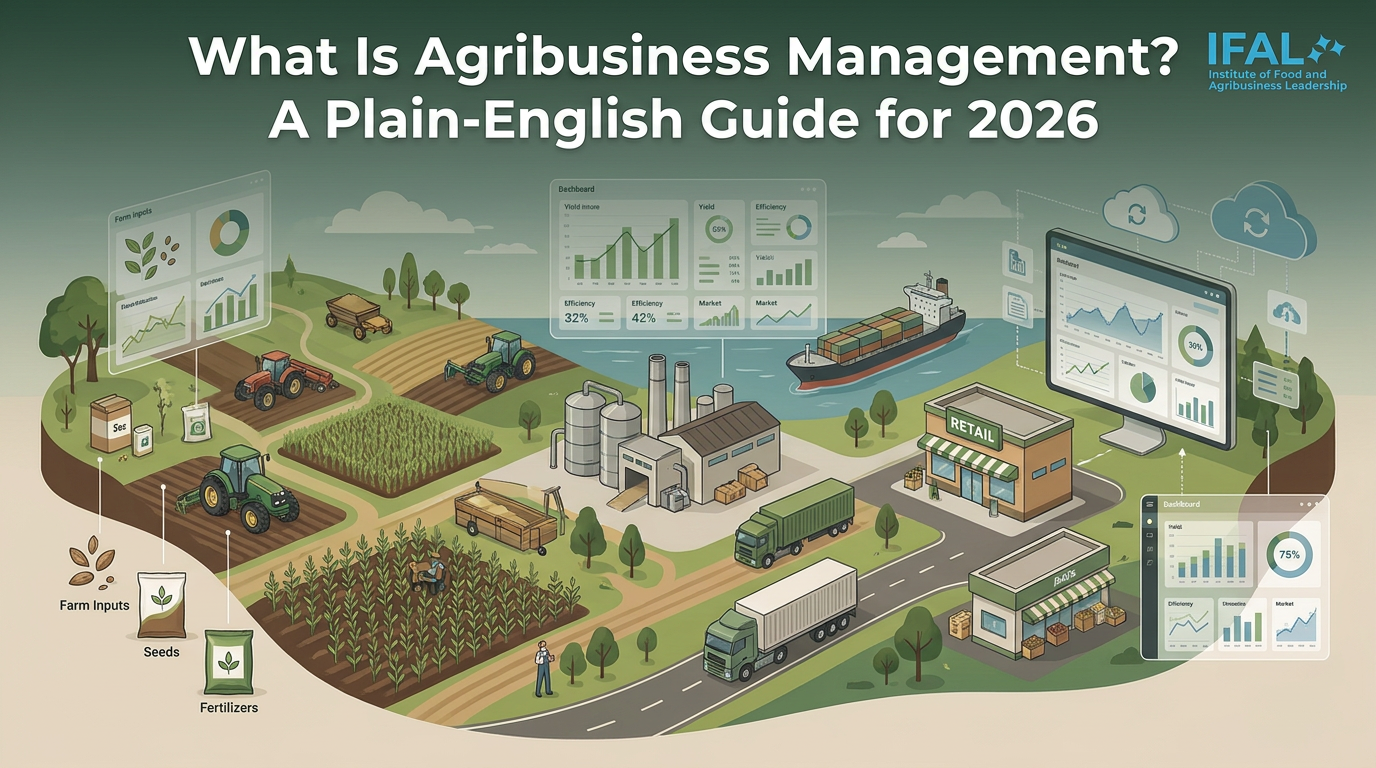
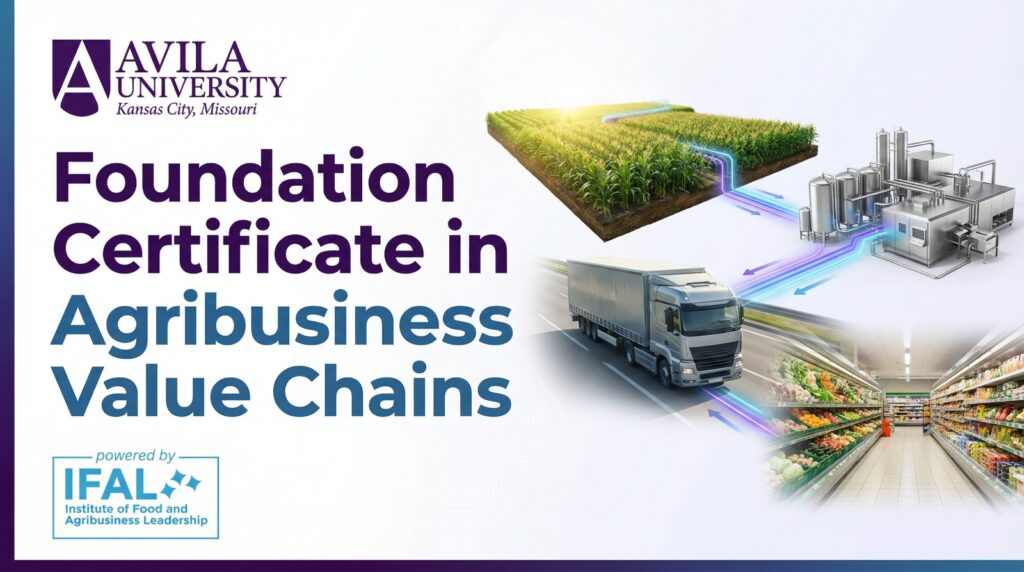
At the heart of modern agribusiness are two ideas that professionals must understand. First, there is the idea of the value chain. A value chain is more than a sequence of activities. It is the full system through which products move from inputs and production to processing, logistics, retail, and final consumption. Professionals who think in value-chain terms do not work in isolation. They understand interdependence. Second, there is the idea of the business model. A business model explains how a firm creates, delivers, and captures value. In agribusiness, this may include contract farming, digital marketplaces, premium traceability systems, subscription advisory services, mechanization-as-a-service, or direct-to-market platforms. These two ideas matter because careers are increasingly built around them. Employers want professionals who can improve performance not only within one function, but across the entire business logic of the chain.The Top 10 Skills You Need to Succeed in the Agribusiness Industry
1. Value Chain Thinking
This is the foundation. Value chain thinking means understanding how every actor in the chain affects the final result. It means recognizing that a problem at the retail end may begin at harvest, that low margins may come from poor coordination, and that better information can improve outcomes for everyone.2. Business Model Understanding
Knowing how a business works is as important as knowing what it produces. Agribusiness professionals need to understand how different models generate revenue, manage costs, reduce risk, and scale growth.3. Market and Consumer Insight
Agribusiness no longer succeeds by pushing products into the market and hoping they sell. The strongest professionals understand demand, customer expectations, quality signals, and willingness to pay.4. Financial and Commercial Literacy
Great ideas fail when the numbers do not work. Every agribusiness professional should be comfortable with costs, margins, pricing, return on investment, and commercial risk.5. Supply Chain and Operations Management
Agribusiness is a business of timing, movement, and coordination. Operational excellence often determines whether value is captured or lost.6. Relationship Building and Stakeholder Collaboration
Agribusiness is deeply relational. The strongest professionals know how to build trust, communicate clearly, and create win-win partnerships across the chain.7. Strategic Thinking and Problem Solving
Strategic thinkers do not stop at symptoms. They investigate systems. This skill turns managers into leaders.8. Digital and Data Literacy
From digital advisory tools to dashboards and traceability systems, agribusiness is becoming more data-driven every year.9. Sustainability and Risk Awareness
Professionals must understand sustainability as a business issue linked to resilience, market access, and long-term competitiveness.10. Leadership, Communication, and Adaptability
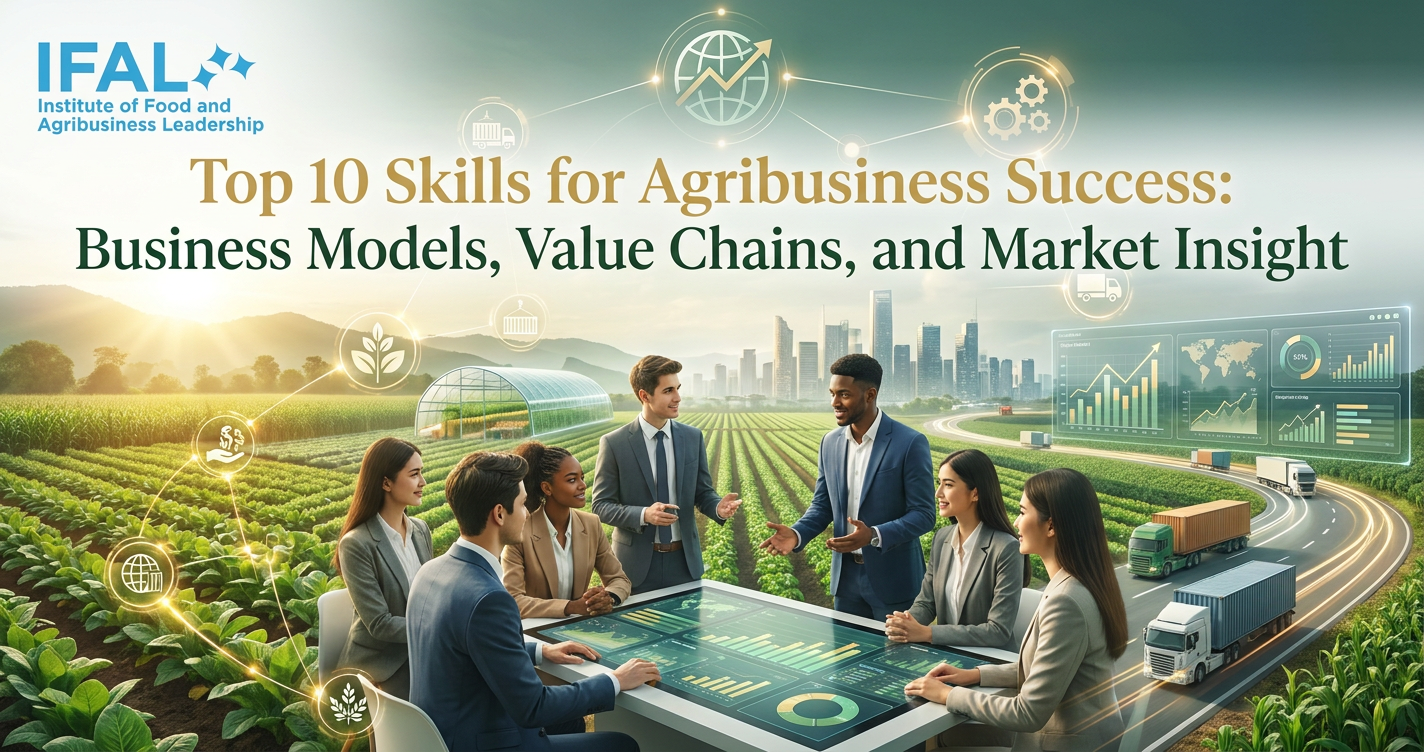
The industry is changing too quickly for static expertise alone. Professionals need to lead, learn, communicate, and adapt continuously.Key insight: The agribusiness professionals who grow fastest are often the ones who understand not just agriculture itself, but how agriculture creates value across markets, business models, and supply chains.
Historical Context: How Agribusiness Skills Evolved
Historically, many careers in agribusiness were built around production efficiency, trading networks, or operational execution. These remain important. But over time, globalization, supermarket expansion, food quality standards, digital tools, and consumer expectations changed the equation. The industry moved from asking, “How do we produce more?” to asking, “How do we create more value, more efficiently, for the right market?” That shift changed the skill profile of successful professionals. Technical knowledge remained essential, but it was no longer enough on its own.Future Outlook: What Will Matter Even More Next
If the past decade expanded the agribusiness skill set, the next decade will deepen it further.- More digital integration
- More sustainability pressure
- More ecosystem collaboration
Key Takeaways
- Agribusiness success today depends on more than production knowledge.
- Value chain thinking helps professionals understand where value is created, lost, and captured.
- Business model knowledge is a major differentiator in modern agribusiness careers.
- Market insight, financial literacy, and operational discipline remain essential.
- Collaboration, adaptability, and leadership are increasingly career-defining skills.
Frequently Asked Questions
Q: What is the most important skill in agribusiness today?
A: One of the most important skills is value chain thinking, because it helps professionals understand how production, markets, logistics, relationships, and consumers fit together.
Q: Why is business model knowledge important in agribusiness?
A: Because agribusiness success depends not only on producing goods, but on understanding how value is created, delivered, and captured profitably across the chain.
Q: Do I need digital skills to succeed in agribusiness?
A: Yes. Even if you are not in a technical role, digital literacy is increasingly important for decision-making, traceability, market access, and performance management.
Q: How can I build these skills systematically?
A: The best path is a mix of practical experience, reflection, and structured learning focused on value chains, markets, business models, and leadership.
Additional Resources
For Deeper Learning:- ACIAR, A Guide to Value-Chain Analysis and Development for Overseas Development Assistance Projects
- Spencer Stuart, Feeding the Future: Leadership in the Food and Agribusiness Industries
- Frontiers in Sustainable Food Systems, Analyzing Business Model Innovation and Market Entry Strategies for Agri-Based Enterprises: A Financial Perspective