Natural Grocers’ smoked salmon launch shows how retailer private label strategy is reshaping food branding, sustainability, and competition for CPG brands.
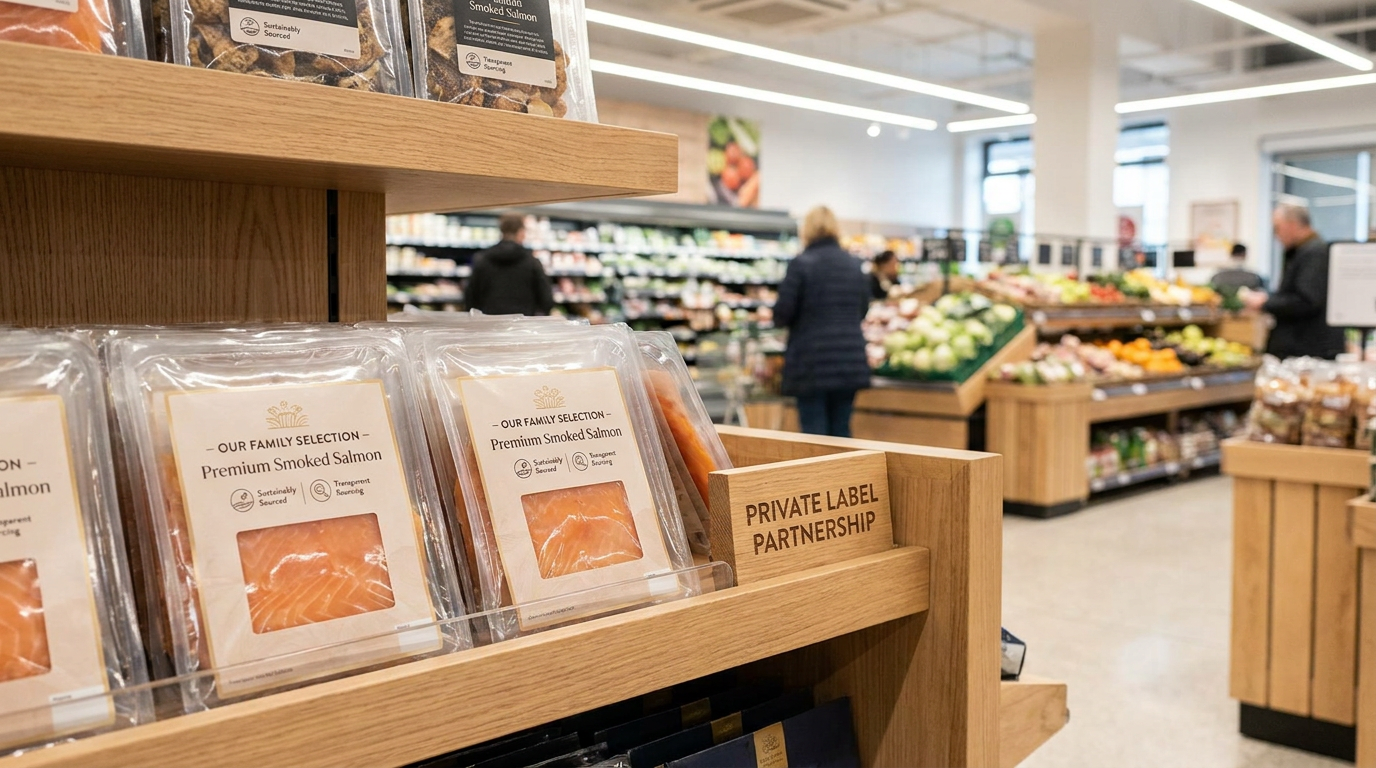
Natural Grocers’ smoked salmon launch reflects a broader shift as retailers use private label to build trust, quality, and sustainability-led brand power.
When Retailers Become Brands: Natural Grocers and Private Label Strategy
Executive Summary
Natural Grocers’ launch of private-label smoked salmon may look like a simple product expansion, but it signals something much bigger in the food industry. Retailers are no longer acting only as sales channels. They are becoming brands in their own right, with their own standards, values, and consumer trust.
This shift is especially visible in categories like seafood, where health, sustainability, and traceability matter. Natural Grocers built its smoked salmon proposition around wild-caught Alaskan fish, Marine Stewardship Council certification, and internal sourcing standards. That combination turns a private-label product into a statement about retailer private label strategy and the future of competition in food.
For CPG brands, producers, brokers, and distributors, the implications are profound. As retailers raise the bar on quality and sustainability, certifications like MSC move from premium differentiators to minimum requirements. The competitive question is no longer who can match the standard, but who can create value beyond it.
Introduction: Why Natural Grocers’ Smoked Salmon Matters
For years, private label was treated as the lower-cost alternative to national brands. It was a way for retailers to offer basic value and capture a little more margin. That old model is fading.
Today, the most effective retailer private label strategy is not built around being cheaper. It is built around being trusted, relevant, and aligned with consumer values. Natural Grocers’ smoked salmon launch captures that shift perfectly.
The product is positioned around several high-value attributes:
- wild-caught Alaskan sockeye and coho salmon
- MSC-certified sourcing
- cold-smoked, small-batch production
- Non-GMO Project Verified
- kosher
- no artificial preservatives, flavors, synthetic colors, or added sugar
- alignment with Natural Grocers’ Gold seafood standards
This is not the language of a bargain substitute. It is the language of a brand.
That matters because when a retailer owns the shelf, the shopper relationship, and the trust signal, it can compete with CPG brands from a position of unusual strength. In effect, the retailer can become both the platform and the brand at the same time.
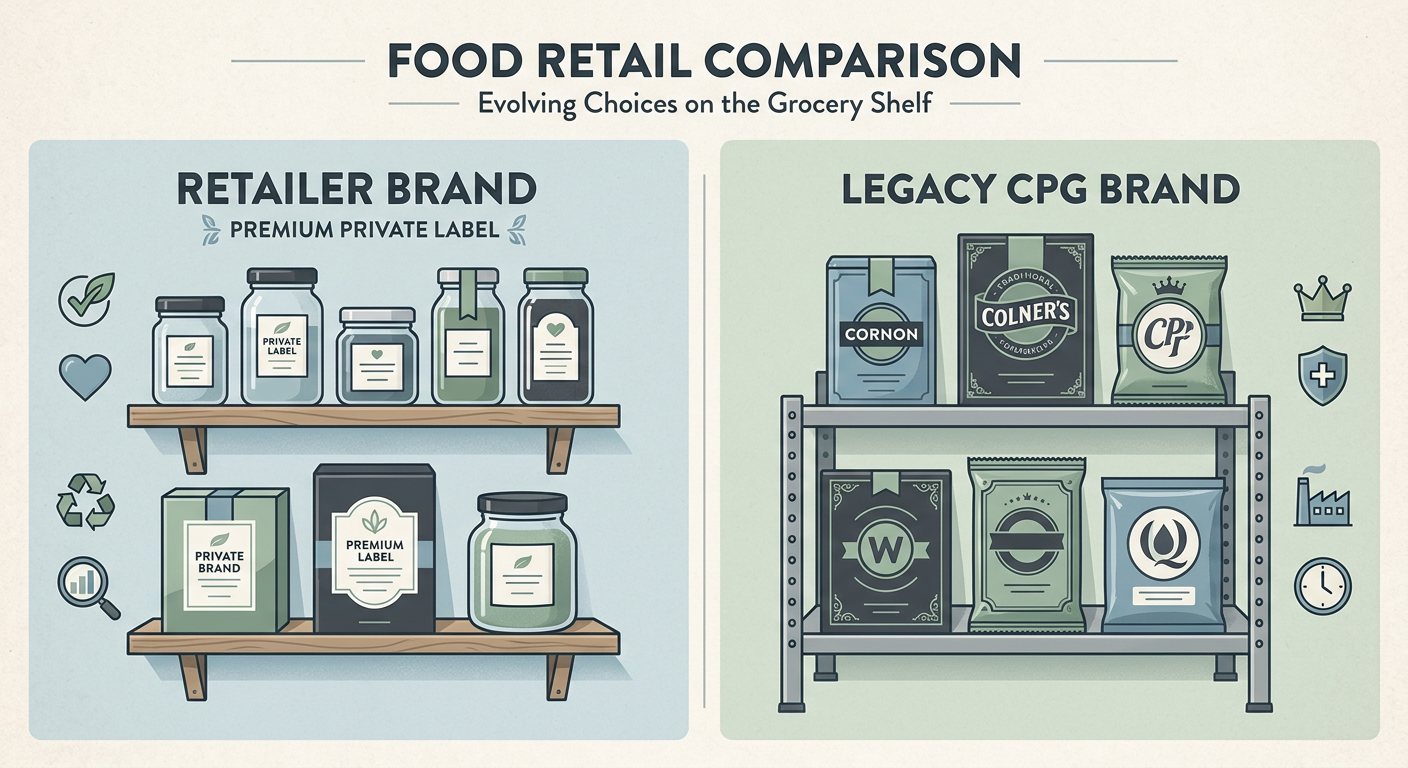
As private label moves upmarket, the contest shifts from price to trust, health, sustainability, and product meaning.
The Rise of Premium Private Label in Food Retail
The growth of premium private label is one of the most important structural changes in modern grocery.
According to Grocery Dive, citing PLMA and Circana data, private label sales in the United States reached $282.8 billion in 2025, growing faster than national brands. Innova Market Insights has also noted that global private label is shifting from a pure price-point play toward premium quality, health, storytelling, and transparency.
This change did not happen overnight. It was shaped by several overlapping forces:
- inflation and consumer pressure for value
- improved quality perception of store brands
- retailer access to better shopper data
- demand for clean-label and sustainable products
- increased consumer willingness to trust retailers directly
- the growth of premium and lifestyle-oriented retail formats
In other words, private label is no longer simply a commercial tool. It is becoming a strategic brand platform.
That is why Natural Grocers’ smoked salmon matters. It shows how a retailer can use private label to extend its brand promise into a high-trust category.
Why Seafood Is a Strategic Category for Retailer Brands
Seafood is one of the most revealing categories in food retail because it combines opportunity with uncertainty.
Consumers are attracted to seafood for protein, wellness, omega-3 content, and culinary appeal. At the same time, they face a confusing set of concerns:
- Is it wild-caught or farmed?
- Was it sustainably harvested?
- What does MSC certification actually mean?
- Is the supply chain traceable?
- Is the product clean and minimally processed?
- Can the label be trusted?
That complexity creates a powerful opening for retailer private label strategy. A retailer that simplifies the decision and makes the shopper feel confident can capture loyalty and margin.
Natural Grocers has done exactly that. Its smoked salmon combines multiple trust markers in one proposition. It reduces the need for shoppers to investigate every detail on their own. The product becomes easy to choose because the retailer has already performed the trust-building work.
This is a key strategic lesson: in categories with high consumer uncertainty, the brand that reduces friction often wins.
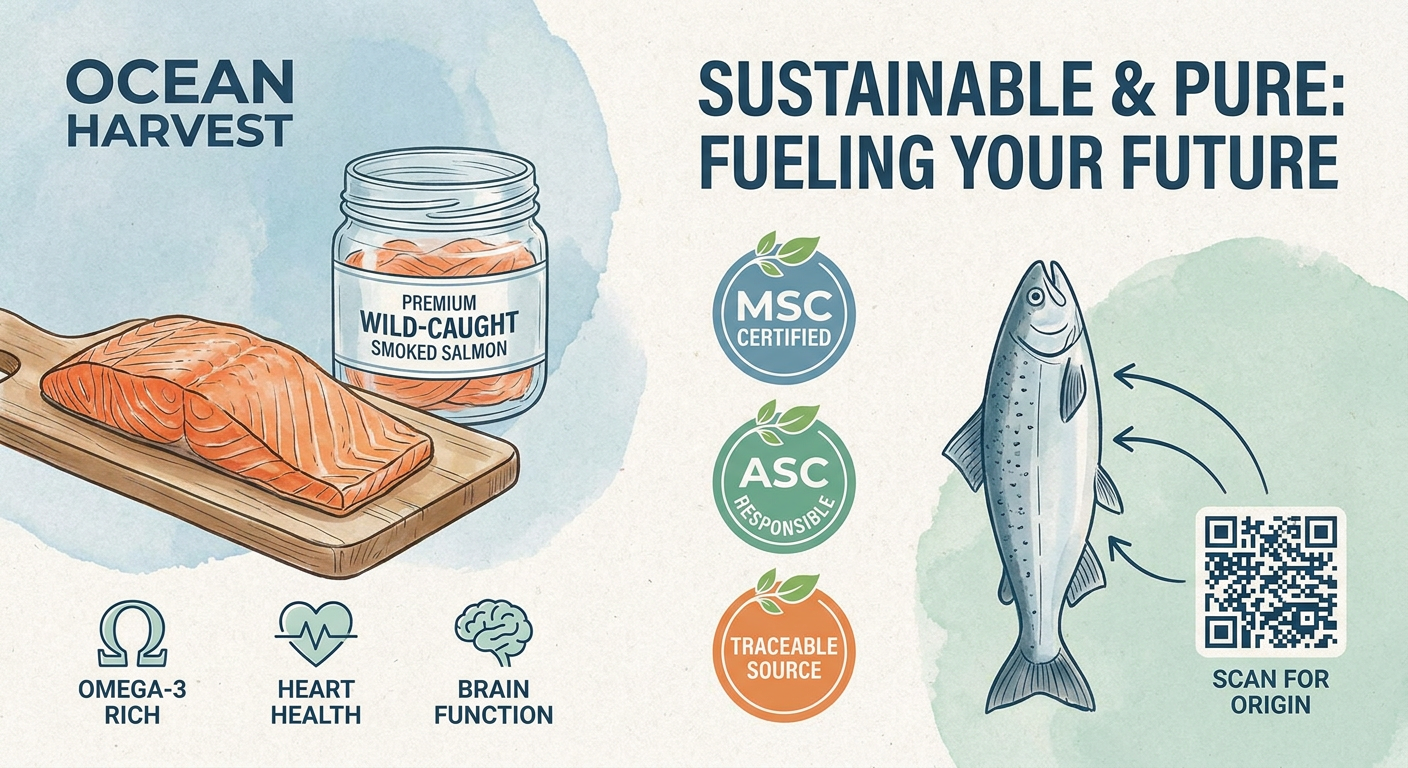
In seafood, certifications, traceability, and wellness cues increasingly work together to create decision confidence for shoppers.
When MSC Certification Becomes Table Stakes
One of the most important implications of this trend is what happens to sustainability claims.
In the past, MSC certification could be a meaningful differentiator for a seafood brand. It signaled responsibility and helped justify a premium. But once a retailer makes MSC-certified sourcing the standard for its private label, the game changes.
At that point, the certification no longer separates one product from another. It becomes the minimum threshold for participation.
This is what it means for sustainability to become table stakes.
For CPG brands, this creates a strategic challenge. If the retailer has already embedded sustainability into its own-brand baseline, then simply showing the same MSC logo on a branded pack is not enough to justify a higher price.
The same pattern can spread beyond seafood. Clean label, responsible sourcing, recyclable packaging, and even certain health claims can quickly move from premium cues to expected basics.
That means branded manufacturers need to create value beyond compliance.
How CPG Brands Can Compete When Retailers Own the Trust Signal
If retailer private label strategy now includes sustainability, quality, and wellness, how can CPG brands still compete?
They need to shift away from basic attribute competition and move toward stronger, harder-to-copy forms of value.
1. Go deeper on transparency
A certification logo provides shorthand. A story creates connection.
Branded companies can build stronger differentiation by offering:
- traceability to specific fisheries or producer groups
- sourcing stories tied to real communities
- deeper visibility into handling, processing, and origin
- digital tools such as QR-based provenance journeys
The more detailed and human the narrative becomes, the harder it is for a broad retailer brand to match at the same depth.
2. Innovate on the product experience
Consumers do not only buy certified food. They buy meals, routines, convenience, and enjoyment.
A CPG seafood brand can differentiate with:
- superior cuts or textures
- unique smoke or flavor profiles
- premium marinades
- ready-to-cook meal formats
- chef-led recipes and serving ideas
- convenience-driven packaging innovation
This changes the conversation from what the product is to what the product enables.
3. Build a stronger health narrative
Another important path is to connect the product more directly to wellness outcomes.
That can include:
- clear omega-3 communication
- protein claims with context
- food-as-medicine positioning
- healthy aging or heart health relevance
- simple, evidence-based nutrition storytelling
If sustainability becomes standard, health communication can become the next frontier of differentiation.
4. Create emotional brand meaning
Retailers can build trust across many categories, but they often struggle to build category-deep emotional identity.
A branded player can still win by becoming the favorite choice of a specific tribe of consumers who care deeply about:
- culinary quality
- athlete nutrition
- family health
- artisanal craftsmanship
- regional heritage
- environmental activism
In a world of stronger private label, brands must stand for something more precise and memorable.
The Role of D2C and Online in Private Label Competition
Direct-to-consumer is not only a sales channel. It is a strategic response to retailer power.
When brands rely entirely on retail distribution, they operate inside an environment the retailer controls. The retailer determines shelf placement, digital visibility, promotions, and category framing. That makes it difficult for brands to fully express their uniqueness.
A D2C strategy changes that by giving brands:
- direct ownership of the customer relationship
- first-party data
- control over storytelling
- a platform for education and content
- opportunities for subscriptions and repeat purchase
- room for personalization and loyalty programs
For seafood and other premium food categories, D2C can create the virtual theatre that is often missing on a retailer site. A brand can show sourcing videos, explain fishery standards, share recipes, and build a stronger lifestyle proposition.
This does not replace retail. But it does give brands a way to reclaim narrative power and reduce dependency on retailers that are increasingly acting like competitors.
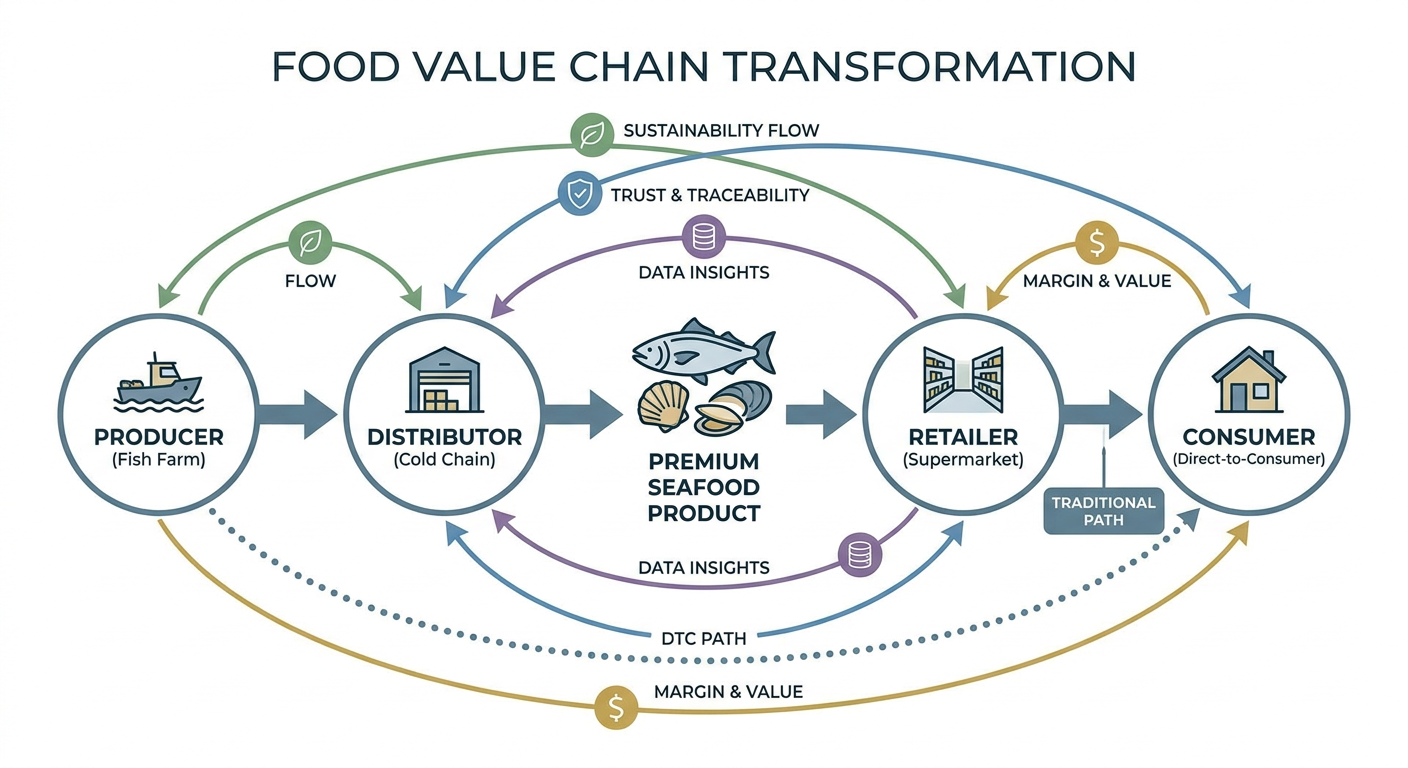
Retailer-owned brands are rewriting the value chain by shifting control over trust, data, margin, and customer access.
Implications for Producers, Brokers, and Distributors
The rise of premium private label does not only affect brands. It reshapes the wider food value chain.
Producers: private label, own brand, or hybrid?
Producers now face a strategic fork in the road.
They can choose to become:
- strategic private-label suppliers, focused on certification, quality consistency, and operational excellence
- consumer-facing brand builders, focused on storytelling, differentiation, and marketing investment
- hybrid players, balancing retailer contracts with their own brand ambitions
Each option carries trade-offs.
A private-label strategy can bring scale, stability, and closer retailer relationships. But it also creates dependence and margin pressure. A branded strategy offers more upside but requires significant investment in marketing, distribution, and consumer engagement. A hybrid model can work, but only if the producer clearly separates retailer-facing and brand-facing value propositions.
Brokers and distributors: evolve or be bypassed
Traditional intermediaries are also under pressure. As retailers build direct sourcing capabilities, the classic middleman role becomes less secure.
To remain relevant, brokers and distributors need to offer services that go beyond simple transaction handling, such as:
- aggregating certified supply from smaller producers
- providing advanced cold-chain logistics
- managing traceability and compliance data
- supporting private-label product development
- offering market intelligence and category insight
The future belongs to intermediaries that solve complexity, not just move products.
Historical Context: How Private Label Changed
To understand the significance of Natural Grocers’ smoked salmon, it helps to see the broader history.
Private label began as a low-cost alternative. It was usually designed to copy branded staples with simpler packaging and lower expectations. During periods of economic stress, it grew because shoppers needed affordability.
But several developments changed the game:
- retailer data capabilities improved
- packaging and product quality rose
- sustainability moved into mainstream consumer awareness
- health and clean-label standards became more important
- younger consumers became more flexible about where trust comes from
- retailers learned to build multi-tier private label architectures
This is how private label moved from cheap substitute to curated proposition.
Natural Grocers’ smoked salmon reflects this newer phase. It is not trying to imitate a national brand. It is trying to embody a retailer worldview built around quality, standards, and trust.
Future Outlook: The Next Battle Will Be Won Beyond the Badge
Looking ahead, more retailers will likely make sustainability, traceability, and health-led claims standard features of their private-label portfolios. In that environment, many of today’s premium attributes will lose their power to differentiate.
That does not make those attributes less important. It makes them more universal.
The next phase of competition will be shaped by who can go beyond the badge and offer something richer:
- radical transparency
- measurable health outcomes
- better taste and convenience
- deeper provenance
- stronger digital engagement
- community and identity
- new routes to consumer through D2C or membership ecosystems
Retailers will keep gaining strength because they control the environment of purchase and can extend trust across multiple categories. But strong CPG brands can still compete if they stop relying on yesterday’s signals and build tomorrow’s meaning.
Natural Grocers’ smoked salmon is a small product with a big message: in modern food retail, the fight is no longer just about shelf space. It is about who owns the story of trust.
Key Takeaways
- Natural Grocers’ smoked salmon launch is a signal of a broader retailer private label strategy shift.
- Private label is moving from low-cost substitution to premium, trust-led brand building.
- Seafood is a high-value category because trust, sustainability, and health all matter at once.
- MSC certification and similar standards can quickly become table stakes.
- CPG brands need to differentiate through transparency, innovation, health storytelling, and emotional identity.
- D2C helps brands regain control of narrative and customer data.
- Producers must decide whether to focus on private label, their own brand, or a hybrid strategy.
- Brokers and distributors must evolve into value-added partners.
- The future of competition in food will be defined beyond certifications alone.
Source Links
- Natural Grocers smoked salmon launch
- Innova Market Insights private label trends
- Grocery Dive private label sales record
- Sustainable seafood guide
- Private label and premium products research
Natural Grocers’ smoked salmon launch shows how retailer private label strategy is reshaping food branding, sustainability, and competition for CPG brands. Natural Grocers’ smoked salmon launch reflects a broader shift as retailers use private label to build trust, quality, and sustainability-led brand power. When Retailers Become Brands: Natural Grocers and Private Label Strategy Executive Summary…