A Free Agribusiness Workforce Training Resource: The Ebook Built on 15 Years of Business Model Research
Most agribusiness employers already run some kind of training — onboarding modules, a supply chain course, a leadership track, something. The problem isn't usually a lack of training. It's that training spend is hard to defend when the ROI is fuzzy, and harder still to defend when different teams come out of it speaking different languages about what the business actually does.
A procurement lead, an R&D manager, and a supply chain coordinator can all sit through solid, well-reviewed training and still walk into a planning meeting with three different mental models of "the business." That's not a curriculum gap in any one function — it's the layer above all of them: a shared framework for how value actually gets created, delivered, and captured across an agribusiness value chain. Most training programs don't cover it, because it doesn't belong to any single department.
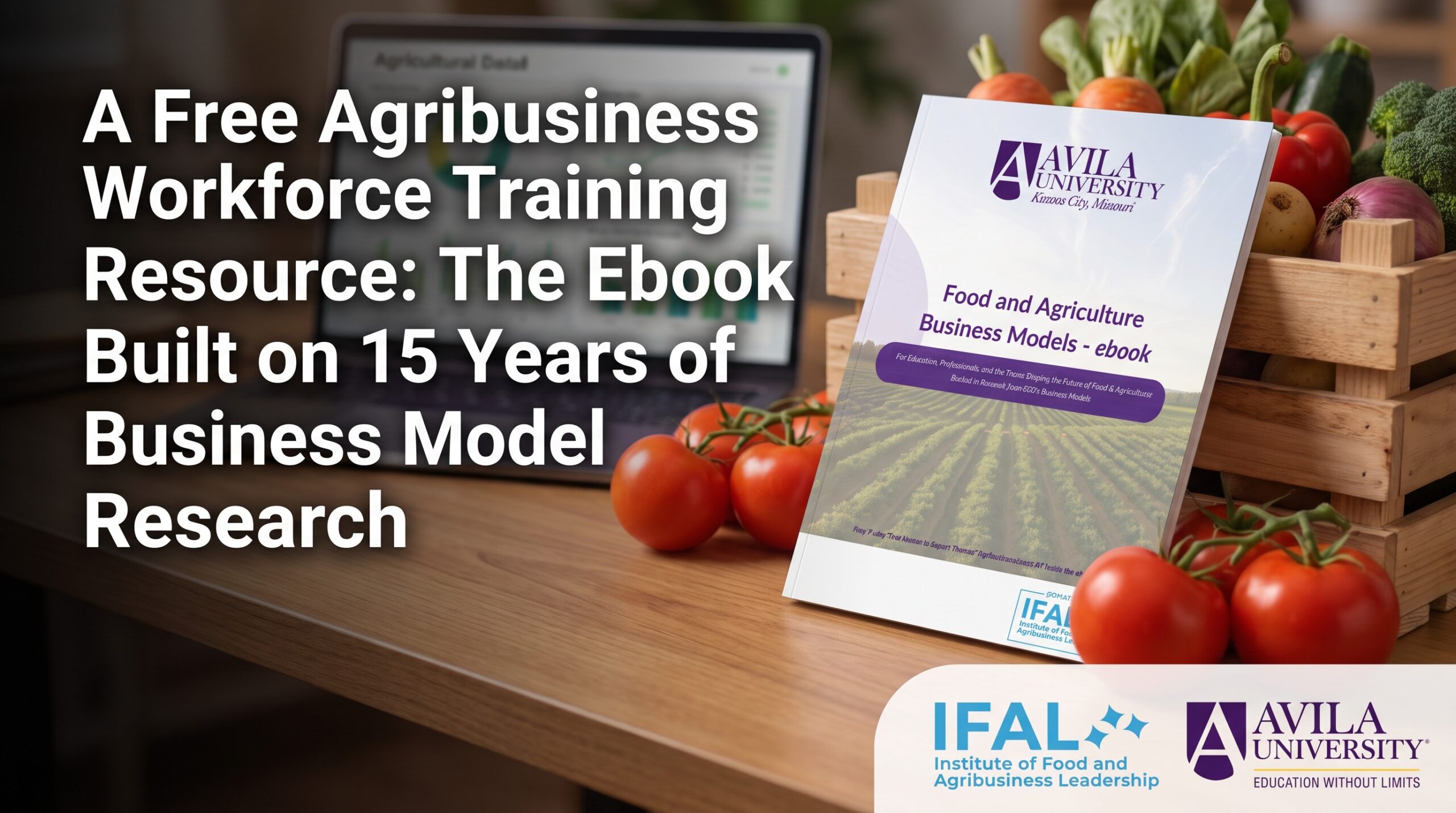
That's the specific gap Food and Agriculture Business Models was built to close — a free ebook, no signup required to start reading, built from 15+ years of research across 300+ business models in more than 30 countries. It's produced through Agribusiness Academy's work with the Institute of Food and Agribusiness Leadership (IFAL), co-credentialed with Avila University, and it's designed to sit alongside whatever training your team already runs — not replace it.
The business case, in plain terms
If you're the one who has to justify training spend to a VP or a board, you already know the harder sell isn't "we need more training." It's "we need training that changes how people actually work together." That's measurable in a way generic upskilling isn't: fewer cross-functional misunderstandings, faster alignment in planning cycles, less time spent re-litigating strategy decisions that should have been settled by a shared framework.
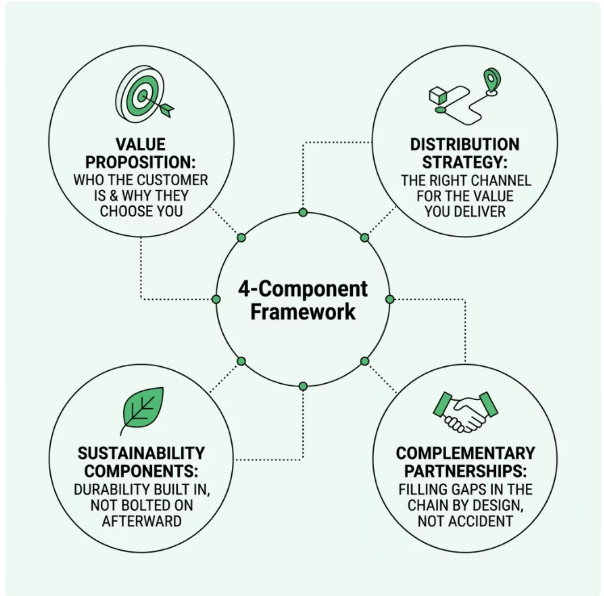
The ebook's structure — the same 4-component framework used in IFAL's Foundation Certificate in Agribusiness Value Chains — gives teams that shared language directly:
- Value Proposition — who's the customer, what problem you're solving, why they choose you over anyone else
- Distribution Strategy — is your channel built around the value you deliver, or just the channel that was easiest to set up
- Complementary Chain Partnerships — are your gaps filled on purpose, or by accident
- Sustainability Components — is durability designed into the model, or bolted on afterward as a compliance line item
None of that replaces functional or technical training. It sits above it — the layer that makes the rest of your training investment add up to something coherent across teams, instead of four departments each optimizing their own piece in isolation.
Demonstrated, not just explained — three times over
Frameworks are easy to write and hard to trust on the page, because they all sound reasonable in the abstract. What's harder to fake is a real operator whose numbers actually worked — and the ebook doesn't stop at one example.
Each of the four components is walked through using a single running case: Honing Tomaten, a Dutch tomato producer that spent decades as an anonymous supplier buried in a conventional auction-trader-wholesaler chain — no pricing control, no connection to the end customer — before rebuilding itself around a sharper value proposition, a direct relationship with specialist grocers, and eventually a circular sustainability play (turning rejected tomatoes into its own ketchup line rather than writing them off as waste).
Then a bonus chapter tests the same framework against two more operators, in different markets, to confirm it isn't just a story that happens to work for one Dutch farm:
- What Chefs Want! — a foodservice distributor that grew from a one-van produce route in Louisville to serving more than 16,000 restaurants, by building the opposite model to national broadliners like Sysco: no minimum orders, split cases, daily delivery, deep local sourcing
- ProducePay — a U.S./Latin America platform giving fresh produce growers instant post-harvest financing and transparent pricing, built around a target segment traditional agricultural lending had underserved
Three companies, three sectors, three different starting points — the same four questions applied each time. That's the version of "proof" a training budget conversation actually needs: not a definition slide, but a framework that held up across a tomato grower, a food distributor, and a fintech platform.
Where this fits into your workforce strategy
The ebook is free and ungated to start — read the whole thing before anyone asks for an email address. It works as a shared pre-read for a team before a planning cycle, a reference document during onboarding, or simply the fastest way to evaluate whether the thinking behind IFAL's Foundation Certificate is worth building into a broader workforce training plan.
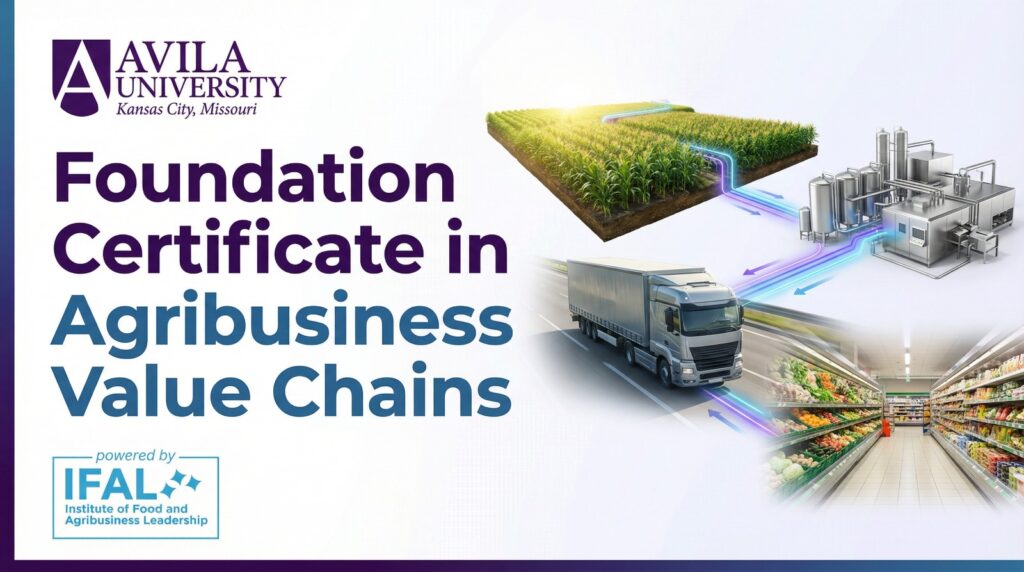
For employers exploring structured, credentialed training at team or cohort scale, Agribusiness Academy's employer programs connect directly to IFAL's Foundation Certificate in Agribusiness Value Chains — a 45-hour, AI-coached program co-credentialed with Avila University (HLC-accredited, Kansas City), deployable across a team rather than one learner at a time.
Read Food and Agriculture Business Models — free, no signup to start.