-
-
AgriFoodTech Business Model Design: A Comprehensive Guide
Estimated reading time: 10 minutes
Key Takeaways
- AgriFoodTech combines digital technology with traditional farming to create efficient, sustainable, and profitable food value chains.
- Understanding the fundamentals of AgriFoodTech business model design is crucial for success in the evolving agriculture sector.
- Current trends like precision agriculture, sustainability-focused technologies, and farm robotics are driving innovation in AgriFoodTech.
- Designing effective business models involves key elements like customer segments, value propositions, and revenue streams.
- Addressing challenges and leveraging opportunities can help businesses navigate the AgriFoodTech landscape successfully.
Want to take your learning further? The Mini MBA in Sustainable Food Supply Chains offers deep insights into business strategy, innovation, and sustainability in AgriFoodTech.
Explore the Mini MBA: Mini MBA in Sustainable Food Supply Chains
Table of contents
Introduction
The world of agriculture and food production is undergoing a dramatic transformation through AgriFoodTech. This involves combining cutting-edge digital agrifood technology with traditional farming practices to create more efficient, sustainable, and profitable food value chains.
AgriFoodTech brings together technological advancements to optimize efficiency, improve yields, ensure sustainability, and meet our growing global food demands. From real-time soil monitoring to innovative food products, AgriFoodTech startups are reshaping every aspect of the food supply chain.
In this comprehensive guide, you’ll discover:
-
- The fundamentals of AgriFoodTech business model design
-
- Current trends driving innovation in the sector
-
- Practical strategies for creating effective business models
- Real-world case studies and success stories
Understanding AgriFoodTech
What is AgriFoodTech?
AgriFoodTech encompasses a broad spectrum of technologies and innovations applied to agriculture and food production. It combines two major components:
-
- AgTech: Technologies focused on improving farm efficiency and developing farm production
- FoodTech: Innovations across the entire food value chain
The sector leverages digital tools, data analytics, artificial intelligence, and machine learning to revolutionize farming practices. These technologies help address critical challenges like:
-
- Climate change adaptation
-
- Resource scarcity
-
- Food security concerns
-
- Supply chain optimization
For more insights on sustainability in AgriFoodTech, refer to this resource.
AgriFoodTech Business Model Design
The Building Blocks of Success
A successful AgriFoodTech business model describes how a company creates, delivers, and captures value. The Business Model serves as an essential tool, comprising 4 key elements:
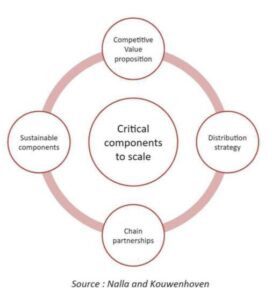
Value Proposition
- Who is your target segment and what
- t are their specific needs
- What benefits do you deliver for your target segment?
Distribution Strategy
-
- How do you reach customers?
-
- What distribution methods work best?
Complementary Partnerships
- Who are your strategic allies?
- What collaborations matter most?
Sustainability Elements
- Building sustainability that scales around the value proposition
- Addressing the unsustainable elements of the business
Business processes have to be established around the business model, it includes
Customer Relationships
- How do you maintain connections?
- What support systems are needed?
Revenue Streams
- How do you generate income?
- What pricing models work best?
Key Resources
- What assets are essential?
- What technologies do you need?
Key Activities
- What must you do to succeed?
- What operations are critical?
Cost Structure
- What are your major expenses?
- How do you maintain profitability?
To deepen your understanding of value chains in agribusiness, explore this guide.
Current AgriFoodTech Trends
Leading Innovations Shaping the Industry
1. Precision Agriculture and Smart Farming
- Sensor networks for real-time monitoring
- IoT devices for automated control
- Data analytics for optimized decision-making
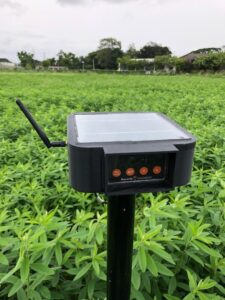 Source: Heliot.ai
2. Sustainability-Focused Technologies
- Carbon footprint reduction tools
- Resource conservation systems
- Eco-friendly farming practices
3. Agribusiness Marketplaces
- Digital trading platforms
- Supply chain optimization tools
- Direct farmer-to-consumer connections
 Source: Thrivemarket (USA)
4. Farm Robotics and Automation
- Autonomous farming equipment
- Smart harvesting systems
- Labor-saving technologies
-
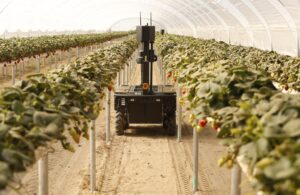
- Strawberry picking robot (Source: Los Angeles Times)
5. Remote-Sensing Solutions
- Satellite imaging
- Drone monitoring
- Advanced crop health analysis
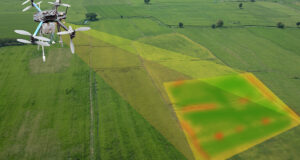
Remote Sensing (Source: Cropin)
6. Data-Driven Solutions
- Predictive analytics
- Big data farming applications
- AI-powered decision support
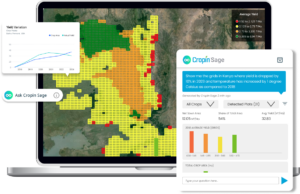 Business Intelligence (Source: Cropin)
For an in-depth look at the latest trends in food and agribusiness, visit this resource.
Digital Agrifood Technology Integration
Transforming Traditional Agriculture
Digital agrifood technology represents the backbone of modern farming operations. Key applications include:
AI and Machine Learning Applications
- Crop yield prediction
- Disease prevention systems
- Resource optimization tools
Blockchain Technology
- Supply chain transparency
- Food traceability
- Secure data management
Mobile Applications
- Real-time farm management
- Market information access
- Weather monitoring and alerts
To understand how agritech is revolutionizing modern farming, check out this course.
Innovative AgriFoodTech Solutions
Cutting-Edge Technologies Driving Change
Precision-Agriculture Hardware
- Real-time soil analysis
- Automated irrigation systems
- Smart fertilization tools
Remote-Sensing Technologies
- Crop health monitoring
- Field mapping
- Resource tracking
Farm Robotics
- Automated planting systems
- Precision harvesting
- Maintenance automation
Sustainability Solutions
- Carbon tracking tools
- Water conservation systems
- Waste reduction technology
Digital Marketplaces
- Online trading platforms
- Input purchasing systems
- Direct marketing channels
Challenges and Opportunities
Navigating the AgriFoodTech Landscape
Common Challenges
- Slow technology adoption rates
- ROI demonstration difficulties
- Data privacy concerns
- Solution fragmentation
Key Opportunities
- Personalized farming solutions
- Improved user experiences
- Integrated service platforms
- Sustainability-driven growth (Learn More)
Success Strategies
- Build trust through transparency
- Demonstrate clear value
- Provide comprehensive support
- Focus on user-friendly design
Conclusion
AgriFoodTech business model design represents a crucial framework for transforming agriculture and food production. Success in this dynamic sector requires:
-
- Understanding current trends and technologies
-
- Creating adaptable business models
-
- Focusing on customer needs
- Embracing innovation and change
The future of AgriFoodTech promises continued growth and evolution, making it essential for businesses to stay informed and adaptive in their approach to model design and implementation.Want to take your learning further?
Take the Next Step
If you’re ready to advance your career in food and agribusiness:
Explore Avila University’s Agribusiness Certificate Programs
Identify the certificate that aligns with your career stage
Connect with admissions advisors to plan your learning pathway
Learn more:
https://www.avila.edu/avila-agribusiness-programs/Additional Resources
Stay updated with these valuable resources:
-
- Sustainability Journal Articles
-
- Industry newsletters and blogs
-
- Professional network memberships
- Regular conference attendance
[Sources linked throughout the article]
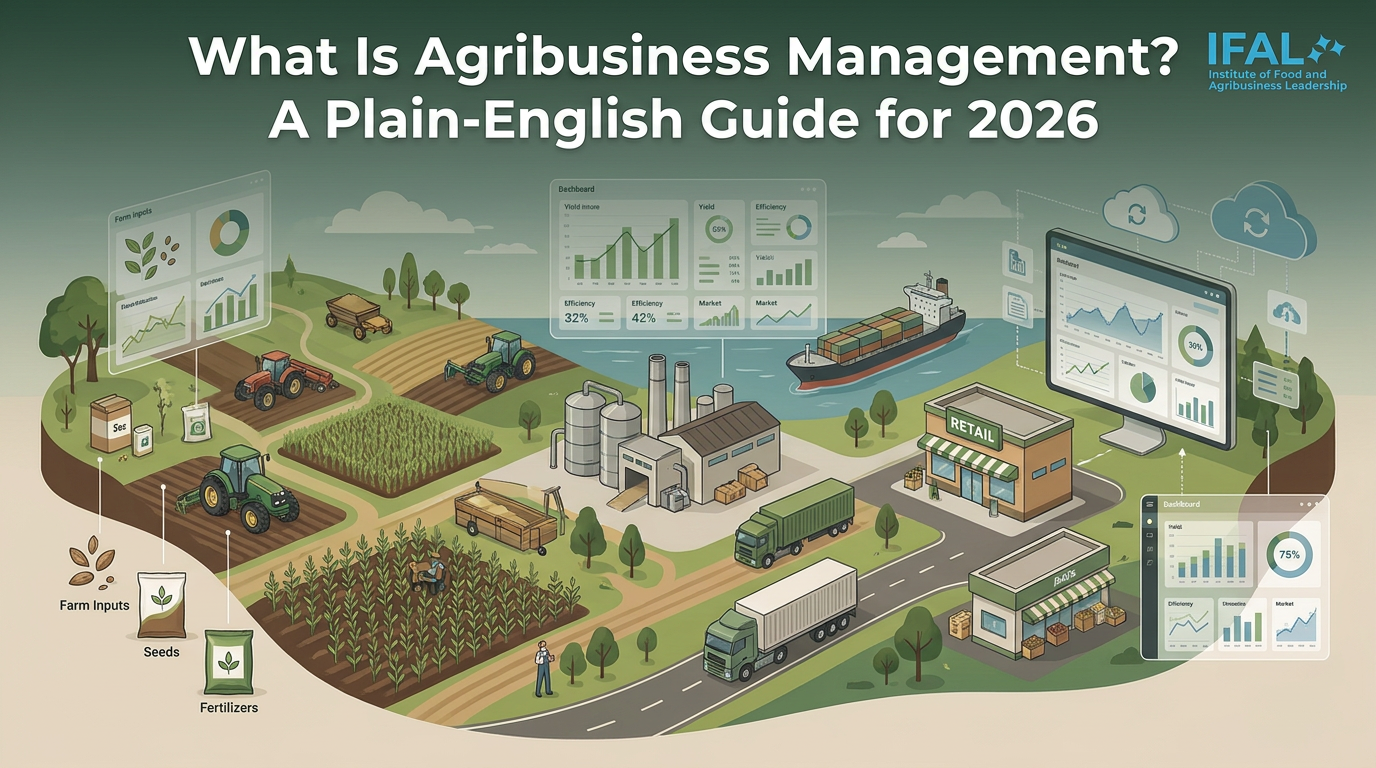
What Is Agribusiness Management? A Plain-English Guide
If you have ever looked at the food on a supermarket shelf and thought, “There is a lot more behind