Food and Agribusiness Trends and Developments: A Comprehensive Guide for 2024 and Beyond
Estimated reading time: 12 minutes
Key Takeaways
-
- The food and agribusiness sector is undergoing significant transformation driven by technological innovation, changing consumer preferences, and environmental concerns.
-
- Key trends include sustainability initiatives and environmental consciousness, digital transformation, and the shift towards healthier food options.
-
- Advanced technologies like precision agriculture, vertical farming, and blockchain are revolutionizing traditional farming practices and supply chains.
-
- Emerging trends such as AI-driven food innovation, cultured meat, and climate-adaptive agriculture will shape the future of food and agriculture.
- Stakeholders must invest in technology, focus on sustainability, and foster innovation to stay competitive in the evolving landscape.
Table of Contents
Overview of Food and Agribusiness Trends
The food and agribusiness sector is experiencing unprecedented transformation driven by technological innovation, changing consumer preferences, and environmental concerns. These shifts are fundamentally altering market dynamics and forcing industry players to adapt their strategies and operations.
Key trends currently shaping the industry include:
-
- Shift towards healthier, more transparent food options
-
- Enhanced focus on food safety and traceability
- Growing demand for alternative proteins
Understanding these trends is crucial for businesses making strategic decisions and investments across the food value chain. They’re not just passing fads but fundamental shifts that are reshaping business models and driving innovation across the sector.
Source: https://brightgreenpartners.com/insights-agrifood-tech-trends-2025/
Current Agribusiness Developments
The agricultural sector is witnessing revolutionary developments that are transforming traditional farming practices:
Precision Agriculture
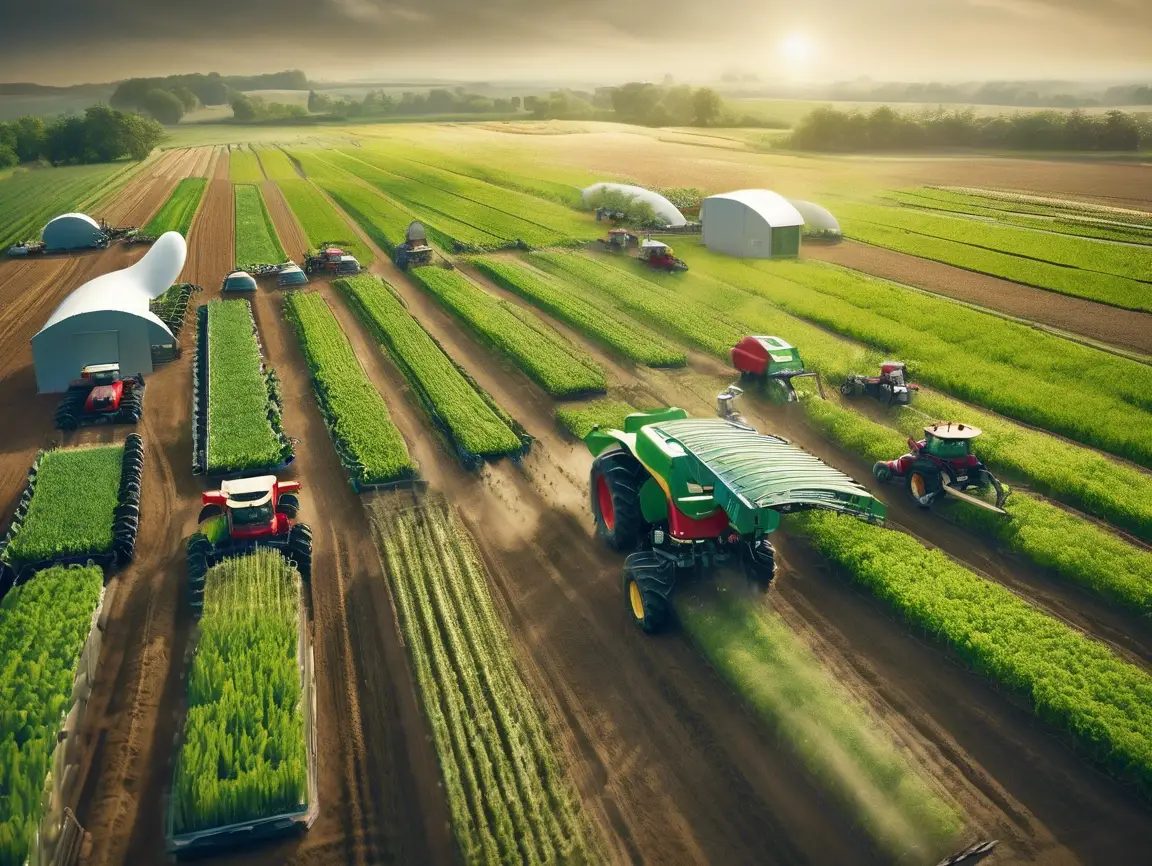
Modern farming has embraced data-driven decision-making through:
-
- IoT sensors for real-time monitoring
-
- Drone technology for crop surveillance
-
- AI-powered analytics for yield optimization
-
- Smart irrigation systems
- Automated farm equipment
These technologies are significantly improving efficiency and reducing resource waste while boosting crop yields.
Vertical Farming
This innovative approach to agriculture is gaining traction, especially in urban areas:
-
- Maximizes limited space through vertical growing systems
-
- Enables year-round crop production
-
- Reduces transportation costs and carbon footprint
-
- Provides fresh produce closer to consumers
- Uses up to 95% less water than traditional farming
Source: https://brightgreenpartners.com/insights-agrifood-tech-trends-2025/
Blockchain Technology in Supply Chains
Blockchain is revolutionizing food traceability:
-
- End-to-end supply chain transparency
-
- Real-time product tracking
-
- Enhanced food safety measures
-
- Reduced fraud risks
- Improved consumer trust
Source: https://www.edc.ca/en/article/top-food-trends-2025.html
Key Industry Food Trends
Consumer preferences are evolving rapidly, driving significant changes in food product development and marketing:
Plant-based and Alternative Proteins
The alternative protein market is experiencing explosive growth:
-
- Plant-based meat substitutes
-
- Dairy alternatives
-
- Fermented proteins
-
- Algae-based products
- Insect proteins
Source: https://brightgreenpartners.com/insights-agrifood-tech-trends-2025/
Functional Foods
Health-conscious consumers are driving demand for:
-
- Probiotic-enriched products
-
- Adaptogenic ingredients
-
- Immune-boosting foods
-
- Brain-healthy nutrients
- Performance-enhancing formulations
Source: https://www.edc.ca/en/article/top-food-trends-2025.html
Clean Label and Transparency
Consumers increasingly demand:
-
- Simple, recognizable ingredients
-
- Clear sourcing information
-
- Ethical production practices
-
- Environmental impact data
- Allergen transparency
Food Trends 2025
Looking ahead, several emerging trends are expected to shape the future of food and agriculture:
AI-driven Food Innovation
Artificial intelligence will revolutionize:
-
- Product development
-
- Flavor creation
-
- Nutritional optimization
-
- Personalized food recommendations
- Quality control
Cultured Meat and Precision Fermentation
Advanced food technology will enable:
-
- Lab-grown meat production
-
- Animal-free proteins
-
- Sustainable alternatives to traditional farming
-
- Reduced environmental impact
- Enhanced food security
Source: https://brightgreenpartners.com/insights-agrifood-tech-trends-2025/
Climate-Adaptive Agriculture
Future-proof farming will focus on:
-
- Drought-resistant crops
-
- Heat-tolerant varieties
-
- Pest-resistant strains
-
- Water-efficient farming methods
- Resilient farming systems
Source: https://www.icl-group.com/blog/technologies-revolutionizing-agriculture-agtech/
Impact on Stakeholders
These trends and developments affect different stakeholders in various ways:
Farmers
Opportunities:
-
- Access to advanced farming tools
-
- Data-driven decision making
-
- New market opportunities
-
- Improved yield potential
- Enhanced resource efficiency
Challenges:
-
- High technology costs
-
- Learning curve for new tools
-
- Climate adaptation needs
-
- Market uncertainty
- Regulatory compliance
Manufacturers
Opportunities:
-
- Product innovation potential
-
- Improved efficiency
-
- New market segments
-
- Enhanced quality control
- Better consumer insights
Challenges:
-
- Investment requirements
-
- Recipe reformulation needs
-
- Supply chain complexity
-
- Regulatory compliance
Source: https://www.agribusinessglobal.com/markets/10-key-trends-to-watch-in-global-agribusiness-in-2025/
Strategies for Staying Ahead
To remain competitive in this evolving landscape:
- Invest in Technology
-
- Embrace digital solutions
-
- Implement data analytics
-
- Adopt automation where possible
-
- Explore AI applications
- Upgrade infrastructure
https://learning.agribusiness.academy/business-of-agritech-innovation
-
- Focus on Sustainability
-
- Implement eco-friendly practices
-
- Reduce waste
-
- Optimize resource use
-
- Consider renewable energy
- Measure environmental impact
https://learning.agribusiness.academy/sustainable-food-supply-chain-training
-
- Foster Innovation
-
- Encourage R&D
-
- Test new products
-
- Partner with tech providers
-
- Listen to consumer feedback
- Monitor emerging trends
Source: https://brightgreenpartners.com/insights-agrifood-tech-trends-2025/
-
Take the Next Step
If you’re ready to advance your career in food and agribusiness:
Explore Avila University’s Agribusiness Certificate Programs
Identify the certificate that aligns with your career stage
Connect with admissions advisors to plan your learning pathway
Learn more:
https://www.avila.edu/avila-agribusiness-programs/
Additional Resources
For more insights into food and agribusiness trends and developments, explore these valuable resources:
-
- Industry newsletters and publications
-
- Agricultural technology forums
-
- Food innovation conferences
-
- Research institutions
- Industry association memberships
Stay connected with the latest developments by following industry leaders and organizations on social media and participating in relevant industry events and webinars.
Frequently Asked Questions
What are the major trends in agribusiness today?
Major trends include sustainability initiatives, digital transformation, alternative proteins, and a focus on food safety and transparency.
How is technology impacting the food industry?
Technology is revolutionizing the industry through precision agriculture, AI-driven innovation, blockchain in supply chains, and more.
Why is sustainability important in agribusiness?
Sustainability ensures long-term viability, meets consumer demands, reduces environmental impact, and can lead to cost savings.
What strategies can businesses implement to stay competitive?
Investing in technology, focusing on sustainability, and fostering innovation are key strategies to remain competitive in the evolving market.
How will future trends shape the food and agribusiness sector?
Future trends like AI, cultured meat, and climate-adaptive agriculture will lead to new products, practices, and market dynamics.