Agribusiness Management: Essential Strategies for Sustainable Success
Agribusiness management combines traditional farming practices with modern business principles to create profitable, resilient, and sustainable agricultural enterprises. Whether you’re looking to optimize farm operations, streamline the supply chain, or expand into new markets, a solid understanding of agribusiness management principles can be a game-changer. In this blog, we explore the core elements of agribusiness management and how it shapes the future of food production and distribution.
1. Why Agribusiness Management Matters
Effective agribusiness management is crucial for transforming farms and related ventures into scalable, sustainable operations. It involves:
- Strategic Planning: Setting short-term objectives and long-term goals to guide investment, production, and marketing decisions.
- Financial Oversight: Monitoring cash flows, profitability, and risk management for steady, long-term growth.
- Adaptation to Market Trends: Aligning products and services with consumer demands, technology, and sustainability expectations.
- Resource Optimization: Efficiently using land, labor, and capital to drive productivity and reduce waste.
To delve deeper into the fundamentals of agribusiness, check out our in-depth guide: What is Agribusiness?
2. Core Principles of Agribusiness Management
Successful agribusiness managers often excel in both agricultural know-how and business acumen. Key principles include:
- Market Orientation: Understanding consumer needs, global trade policies, and competitive landscapes.
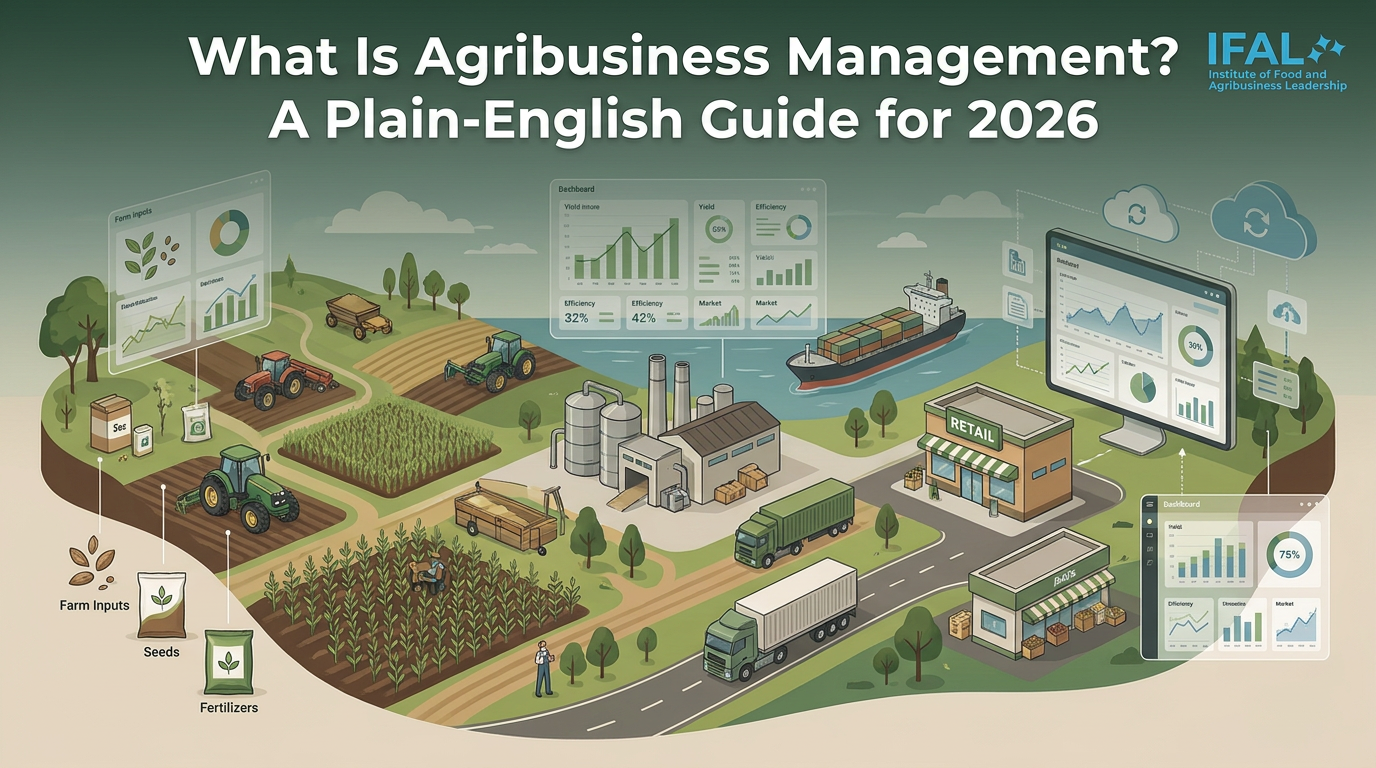
- Value Chain Analysis: Identifying and improving each step from production to distribution to maximize efficiency.
- Sustainability & Ethics: Balancing profitability with environmental stewardship and fair labor practices.
- Innovation & Technology: Leveraging digital tools, data analytics, and automation for competitive advantage.
For a comprehensive look at training options to enhance these principles, explore our Agribusiness Value Chain Training: A Comprehensive Guide .
3. Key Skills for Agribusiness Managers
Building a strong agribusiness career requires a mix of leadership, analytical, and technical skills. These include:
- Decision-Making & Problem-Solving
- Financial Management & Forecasting
- Negotiation & Relationship Building
- Marketing & Sales Strategy
- Supply Chain Optimization
Want to see if you have what it takes to excel in the agribusiness field? Discover the Top 10 Skills You Need to Succeed in the Agribusiness Industry .
4. Strategies for Profitability and Growth
Profitability in agribusiness isn’t just about higher yields; it’s about strategic investments and operational excellence. Techniques include:
- Product Diversification: Expanding into niche crops or specialty products to mitigate risk and target emerging markets.
- Process Automation: Streamlining repetitive tasks with technology to minimize labor costs and improve accuracy.
- Lean Management: Cutting down inefficiencies to optimize resources and accelerate production cycles.
- Data-Driven Decisions: Using analytics to predict trends, manage inventory, and plan harvests.
For more insights on maximizing revenue, reducing costs, and ensuring long-term viability, read Path to Profitability in Agribusiness .
5. Enhancing Your Knowledge with Online Programs
Numerous online courses offer in-depth training for agribusiness management, blending academic theory with industry case studies. Many programs also include mentorship and networking opportunities—key assets for any aspiring manager.
Check out Agribusiness e-Academy Skills Development to explore flexible learning paths and skill-building modules.
Conclusion
Agribusiness management is the art and science of organizing complex agricultural operations into profitable, sustainable ventures. By mastering strategic planning, financial oversight, and adaptive innovation, you can position yourself or your business at the forefront of this dynamic industry. Stay proactive in learning, leverage the right tools, and continuously refine your strategy for ongoing success in agribusiness.
Take the Next Step
If you’re ready to advance your career in food and agribusiness:
- Explore Avila University’s Agribusiness Certificate Programs
- Identify the certificate that aligns with your career stage
- Connect with admissions advisors to plan your learning pathway
References & Further Reading
- FAO (Food and Agriculture Organization) – Global agriculture reports
- World Bank – Agriculture and rural development data
- Agribusiness Academy – Course listings, case studies, and expert insights